Archive for the ‘English’ Category

From Concept to Completion: What to Expect When Specifying a Commercial Thatched Roof

For architects and developers who haven’t specified thatch before, the biggest hesitation usually isn’t the material itself — it’s the unknown. How does the process actually work? Who’s responsible for what? How long does it take, and where does thatch fit into a broader construction timeline?

Here’s what working with Cape Reed on a commercial thatching project actually looks like, from first conversation to handover.

Step 1: Initial Consultation & Site Assessment

Every project starts with understanding the site and the brief. Whether you’re an architect with drawings already in hand, or a developer at the concept stage, our team reviews the location, structural context, and design intent — and importantly, the practical demands the roof will face: footfall, exposure to salt air and sun, and the building’s overall design language.

For coastal hospitality projects especially, this stage also flags anything that will affect the substructure design or fire compliance requirements later in the process, so there are no surprises further down the line.

Step 2: Design & Engineering

This is where thatch earns its reputation for architectural flexibility. We work directly from your drawings and design intent — not a fixed catalogue of shapes — engineering the timber substructure to support curved rooflines, irregular footprints, or dramatic overhangs as needed.

At this stage, we also specify Fireshield, our proprietary fire-retardant treatment, and prepare the technical documentation — structural load data, fire-test certification, material specifications — that your project’s permitting and compliance process will require. If you’re working with a design team unfamiliar with thatch specifications, this is typically where the most collaboration happens.

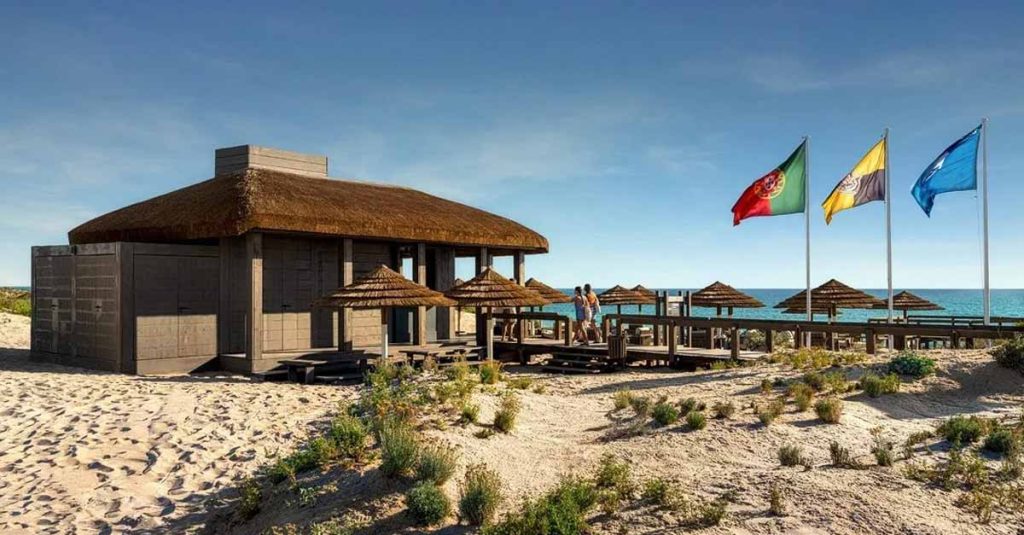
Cape Reed Thatched Roofs at Pairi Daiza

Step 3: Material Sourcing & Preparation

Once the design is finalised, we source Cape reed (Thamnochortus insignis) from the Western Cape region in South Africa, where it’s harvested under managed conditions. The reed is prepared and treated with Fireshield ahead of installation, so what arrives on site is ready to be laid to your specification — not a raw material requiring additional on-site processing that could extend your timeline.

Step 4: Installation

Our own thatching teams manage installation from start to finish — this isn’t subcontracted to a third party partway through, which matters for accountability and quality control on a commercial timeline. Thatch is hand-laid over the engineered timber substructure, built up in layers to the correct pitch and density for durability and thermal performance.

Installation timelines vary with project scale — a single restaurant terrace roof moves considerably faster than a multi-structure resort development — but because we manage design, supply and installation as one continuous process, there’s no handoff delay between stages that often slows down multi-contractor projects.
Step 5: Handover, Documentation & Warranty

On completion, you receive full documentation for your records: fire compliance certification, structural specifications, and maintenance guidance. Every Cape Reed commercial roof is backed by a 15-year structural warranty — a guarantee that’s genuinely rare in the thatching industry, and one we stand behind because of how the material is sourced, treated and installed at every stage above.

From here, maintenance is minimal: periodic inspection is all that’s typically required to keep a properly installed Cape Reed roof performing for decades.

What This Means for Your Project Timeline

Because we manage the full process in-house — design, engineering, sourcing, and installation — there are fewer handoffs, fewer delays waiting on separate contractors, and a single point of accountability from your first consultation through to warranty. For architects managing a broader construction programme, that predictability matters as much as the finished roof itself.

Ready to talk through your project? Our team can walk you through timelines, technical specifications and design options for your specific site. Start the conversation with our commercial thatching team →

FAQ’s

How long does a commercial thatching project typically take?

It depends on scale — a single restaurant terrace roof moves considerably faster than a multi-structure resort development. Because we manage design, sourcing and installation as one continuous in-house process, there’s no handoff delay between stages, which keeps timelines more predictable than projects split across multiple contractors.

Do you work from our architect’s existing drawings, or do we need a new design?

We work directly from your drawings and design intent. Thatch is engineered around your architecture, not the other way around — our team designs the timber substructure to support your intended rooflines, footprint and overhangs, then handles the technical documentation needed for permitting alongside it.

What happens after installation — are we responsible for ongoing maintenance?

Very little is required from you. A properly installed Cape Reed roof needs periodic inspection rather than active upkeep, and you’ll receive maintenance guidance as part of your handover documentation. Every commercial installation is also backed by a 15-year structural warranty, so you’re covered well beyond the initial installation.
Thatch vs. Other Commercial Roofing Materials: The Complete Comparison Guide

When you’re specifying a roof for a hotel terrace, beach club or restaurant, the decision usually comes down to a handful of materials: natural thatch, ceramic tile, metal or steel, and synthetic shade structures like sailcloth or canvas. Each looks different on a moodboard. They perform very differently once they’re actually in use — carrying daily footfall, coastal salt air, and a Mediterranean summer.

Here’s how they actually compare, category by category.

Thermal Performance: Which Roof Actually Keeps Guests Cool?

This is usually the first thing that matters to an operator, and the differences are significant.

  • Cape Reed thatch: Densely packed reed creates millions of trapped air pockets, giving genuinely superior insulation. Guests underneath a well-built thatch canopy can feel noticeably cooler than the ambient temperature outside — without a single fan or mister running.
  • Metal or steel roofing: Absorbs and radiates heat, often making the space beneath it hotter in peak summer than standing in open shade.
  • Ceramic tile: Better than metal, but still nowhere near thatch’s natural insulating capacity, and tile roofs typically need mechanical cooling support for enclosed spaces.
  • Synthetic shade (sailcloth/canvas): Blocks direct sun but does little to manage ambient heat — air still moves freely underneath, and on still days, spaces can feel stagnant and hot.

For any commercial space where guest comfort drives dwell time and repeat visits — a pool bar, a beach club, an outdoor restaurant — this single factor often settles the decision on its own.

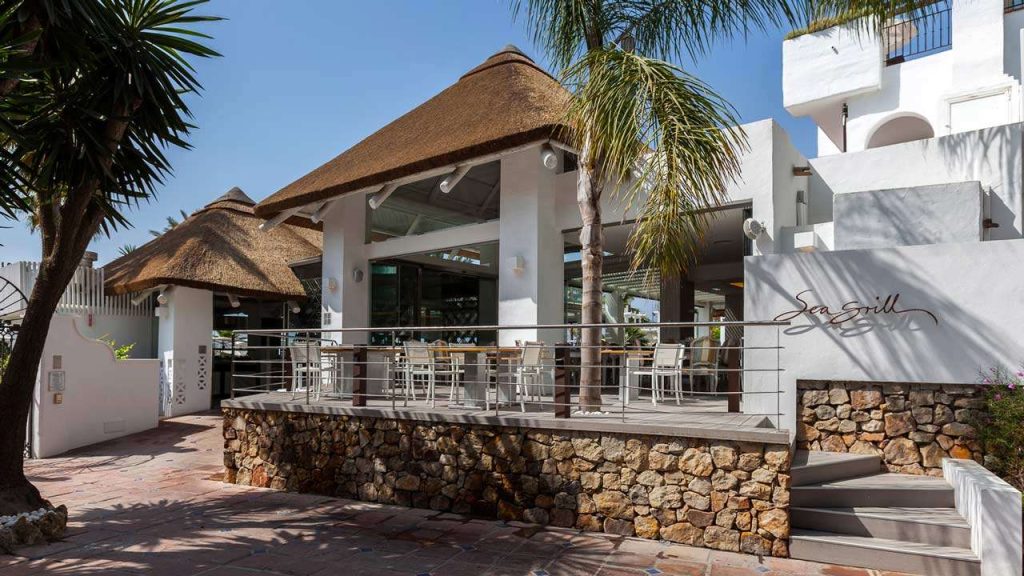
Sea Grill restaurant thatched roof at Puente Romano
Sea Grill Restaurant Puente Romano Thatched Roof Entrance

Fire Safety: Addressing the Biggest Misconception

The most common objection we hear from architects and developers considering thatch is a fire safety concern — understandable, given the material’s reputation from untreated, older installations. It’s also the easiest myth to correct.

Every Cape Reed commercial roof is installed with Fireshield, our proprietary fire-retardant system. It combines a treated underlay with a surface coating engineered specifically for natural thatch, dramatically reducing flammability and flame spread. Fireshield is built to meet the fire safety standards required for commercial public spaces across Europe — the same standard hotels, restaurants and licensed venues are held to regardless of roofing material.

In practice, this means you get the authentic look and performance of natural thatch, backed by documentation your project’s fire compliance sign-off actually requires. Metal and tile carry their own fire ratings, of course, but they aren’t inherently “safer” than a properly treated thatch roof — they’re just a different set of compliance requirements to satisfy.

Cape Reed Fireshield Application
Cape Reed Fireshield Application at Gran Melia

Lifespan & Maintenance: The Real Cost Over Time

This is where the comparison gets interesting, because upfront material cost tells you very little about total cost of ownership.

FeatureCape Reed ThatchCeramic TileMetal/SteelSynthetic Shade
Typical Lifespan20–30+ years25–50 years (but with cracking/repair over time)15–30 years (coastal corrosion shortens this)3–10 years
Coastal/Salt Air ResistanceExcellent — engineered for itGood, but grout and fixings degradePoor without specialist coatings, prone to rustFabric degrades quickly in UV and salt exposure
Routine MaintenancePeriodic inspection, minimal upkeepOccasional re-grouting, tile replacementRepainting/recoating to manage corrosionRegular fabric replacement, seasonal takedown
Structural Guarantee15-year structural warrantyVaries by manufacturerVaries by manufacturerRarely offered beyond 1–2 years

Cheaper, unrefined thatch — soft grasses or straw without proper treatment — genuinely does have the maintenance reputation people worry about, typically lasting only 8–12 years. That’s not the material we use. Properly sourced and treated Cape Reed thatch, laid at the correct pitch by trained thatchers, is a fundamentally different proposition — closer in lifespan to premium tile, with lower ongoing maintenance demands than metal in a coastal environment.

Luxury villa with Cape Reed thatched roof, timber decking, and infinity pool surrounded by natural sand landscaping in Comporta, Portugal
A panoramic view of this villa in Comporta — where Cape Reed thatch, eucalyptus timber decking, and white sand landscaping come together in seamless harmony.

Design Flexibility

Thatch is the only one of these materials that genuinely bends to your architecture rather than the other way around. Curved rooflines, irregular footprints, dramatic overhangs — these are straightforward for hand-laid thatch over an engineered timber substructure, and considerably harder (or impossible) to achieve cleanly in tile or metal without visible seams and joints. Synthetic shade can approximate curves but rarely holds a crisp, architectural line the way a properly finished thatch roof does.

Sustainability

Cape reed is a renewable, biodegradable material, requiring minimal processing before installation and returning to the earth naturally at the end of its life. Metal and tile are more energy-intensive to manufacture and transport, and synthetic shade fabrics are typically petroleum-based and non-biodegradable, with a far shorter replacement cycle adding to their lifetime environmental cost.

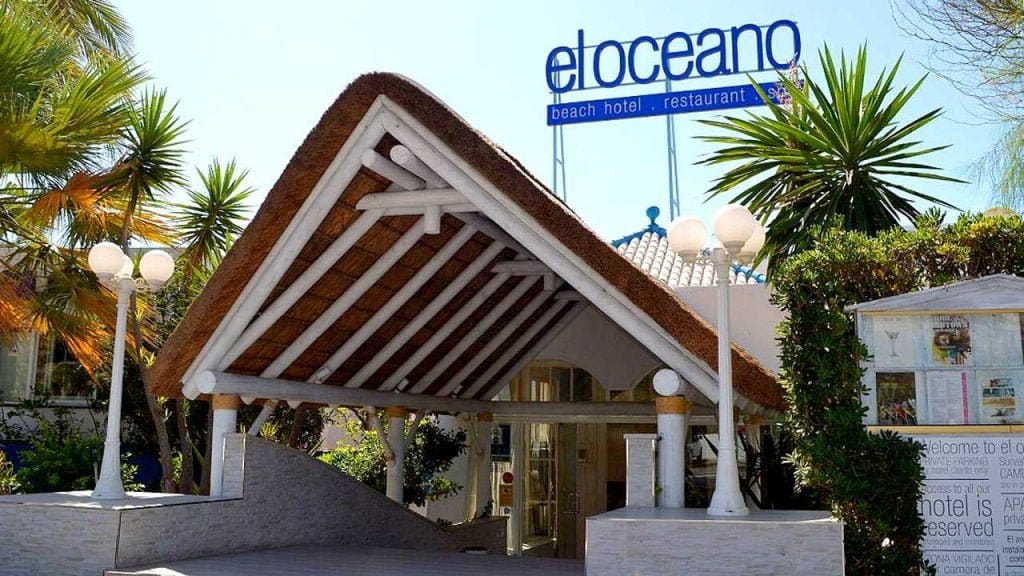
Cape Reed thatched roof at El Oceano
Cape Reed thatched roof entrance at El Oceano

Which Should You Choose?

If your priority is guest comfort, sustainability credentials, and a distinctive architectural finish — and you’re working with a supplier who can produce proper fire compliance documentation and a structural warranty — commercial thatch is very hard to beat on total value over the life of the building. Metal and tile remain sensible choices for certain structural or budget contexts; synthetic shade suits temporary or seasonal installations where longevity isn’t the priority.

For permanent commercial structures expected to perform for decades — hotel terraces, beach club canopies, flagship restaurant roofs — Cape Reed thatch, properly specified and treated with Fireshield, consistently comes out ahead on the metrics that matter most: comfort, compliance, and lifetime cost.

Planning a commercial roofing project?

Our team can talk you through material options, fire compliance documentation, and design possibilities for your specific site. Get in touch with our commercial thatching team →

FAQ’s

Is thatch actually safe to use for a commercial building?

Yes, when it’s treated properly. Untreated or poorly maintained thatch does carry a higher fire risk, which is where the material’s reputation comes from. Every Cape Reed commercial roof is installed with Fireshield, our proprietary fire-retardant system, and comes with fire compliance documentation suitable for your project’s permitting process — the same standard of accountability you’d expect from any commercial roofing material.

How does the cost of thatch compare to tile or metal roofing long-term?

Upfront material cost varies by project, but total cost of ownership tells a different story. Properly sourced and treated Cape Reed thatch typically lasts 20–30+ years with minimal maintenance, while metal roofing in coastal environments often needs recoating or replacement well before then due to salt-air corrosion. Factoring in maintenance and replacement cycles, thatch is frequently the more cost-effective choice over the life of the building, not just at installation.
Can thatch handle a coastal environment with salt air and high humidity?

Yes — this is one of its strongest advantages. Cape reed’s natural composition makes it highly resistant to moisture, fungal decay and salt exposure, which is exactly why it performs so well on beachfront restaurants, pool bars and coastal hotel terraces. Metal, by contrast, is particularly vulnerable to corrosion in the same conditions without specialist coatings.

How much maintenance does a commercial thatched roof actually need?

Far less than most people expect. A properly installed Cape Reed roof requires periodic inspection rather than active upkeep — there’s no repainting, recoating or regular fabric replacement involved, unlike metal or synthetic shade structures. Most maintenance needs are identified during routine inspection long before they become a problem, which is part of why we back every commercial installation with a 15-year structural warranty.

What Is Cape Reed Thatch — And Why Is It Different From Brezo?

If you have ever visited a beachfront resort, a luxury villa, or a boutique hotel in southern Spain and admired the natural warmth of its rooftops, there is a good chance you were looking at thatched roofing. But not all thatched roofs are equal — and in Spain, the distinction matters.

For generations, Spanish builders and landscapers have used brezo, a locally harvested heather plant, to create rustic thatched roofs and pergola coverings. It is a traditional material with deep roots in Iberian architecture. However, as property owners, architects, and community administrators have discovered, brezo has real limitations — particularly when it comes to longevity, fire safety, and long-term performance in coastal climates.

At Cape Reed International, we work exclusively with Thamnochortus insignis, a premium reed harvested sustainably in South Africa. It is the material behind some of the most celebrated outdoor structures on the Costa del Sol, in Portugal, Belgium, and across the Arabian Gulf — and it performs at a fundamentally different level.

Here is what you need to know.

What Is Brezo?

Brezo is the Spanish term for common heather (Calluna vulgaris or Erica species), a flowering shrub that grows abundantly across the Iberian Peninsula. Traditionally, dried heather bundles were layered onto timber frames to create low-cost, naturalistic roof coverings for gazebos, bar terraces, garden structures, and poolside cabanas.

Its appeal is immediate and obvious. Brezo looks organic and rustic, blends beautifully into Mediterranean garden settings, and is inexpensive to source and install. For many years it was the default choice for outdoor roofing across the Costa del Sol and beyond.

However, brezo has a fundamental problem: it deteriorates quickly. In coastal environments — with salt air, intense UV exposure, and damp winters — brezo roofs typically begin to degrade within three to five years. The heather dries out, becomes brittle, loses its colour, and eventually breaks apart. Waterproofing performance drops sharply. And without specialist fire-retardant treatment, dried brezo presents a significant fire risk.

What Is Cape Reed Thatch?

Cape Reed thatch refers specifically to roofing made from Thamnochortus insignis, a restio reed native to the Western Cape region of South Africa. It is a grass-like plant that grows in the fynbos biome — one of the world’s most biodiverse plant ecosystems — and has been used in Southern African thatching for centuries.

What makes Thamnochortus insignis exceptional as a roofing material is its physical structure. Each reed stem is dense, hollow, and coated with a natural silica layer that gives it outstanding resistance to moisture, UV radiation, and biological decay. Unlike brezo, which is essentially a dried flowering shrub, Cape Reed is a true thatching grass engineered by nature for resilience.

When harvested at the correct maturity and installed by experienced thatchers, a Cape Reed roof will typically last between 15 and 25 years — three to five times longer than brezo under equivalent conditions.

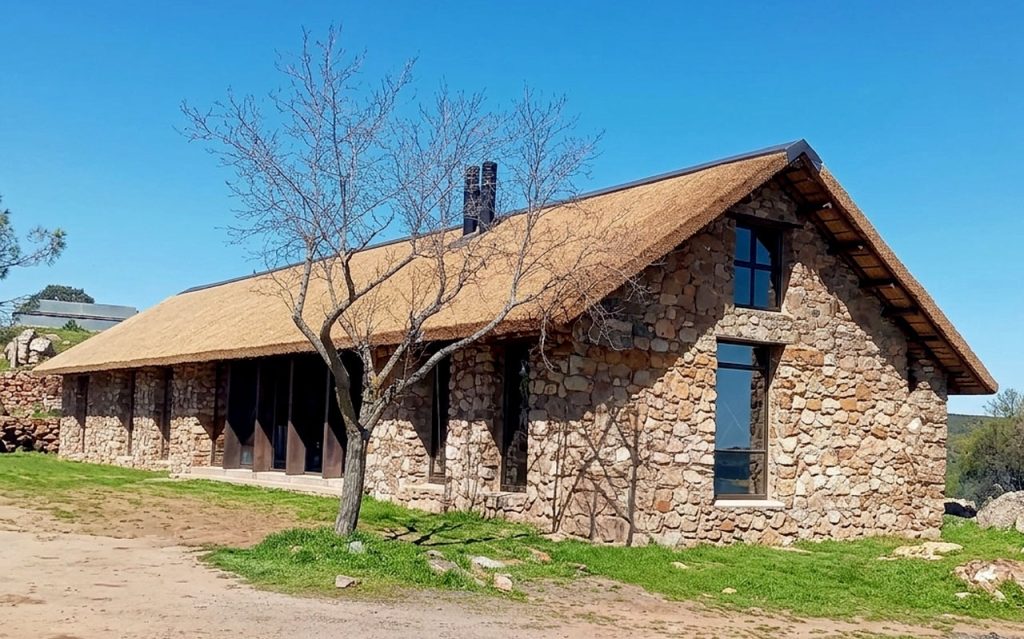
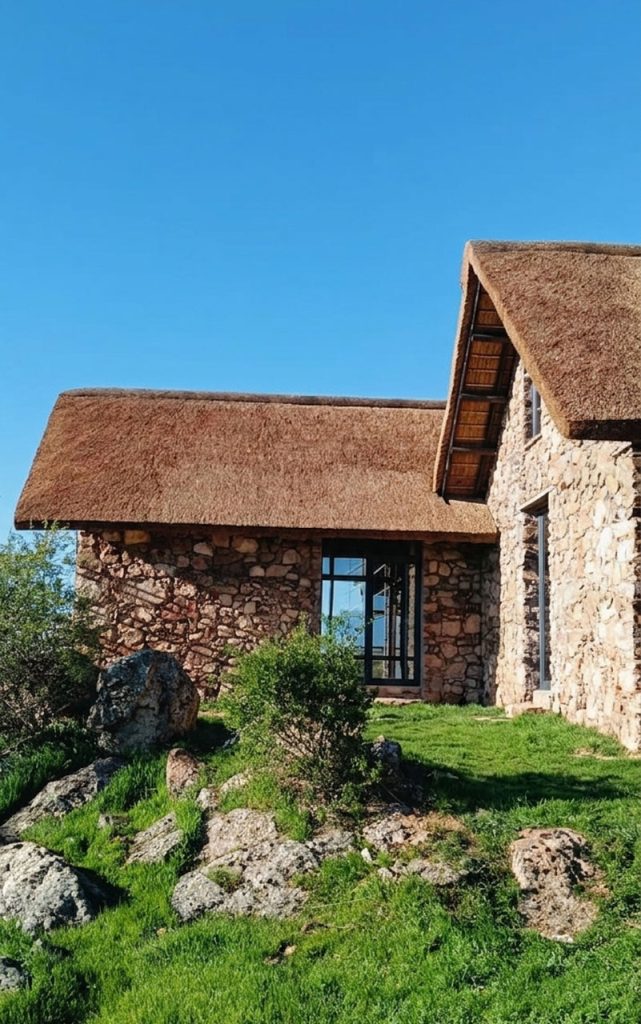
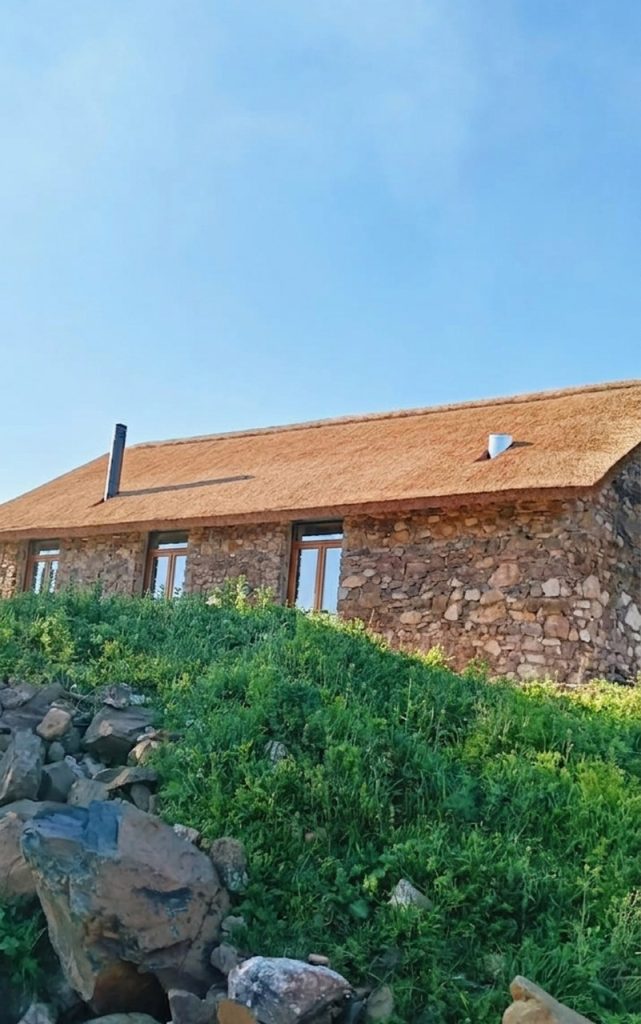
Natural stone mountain lodge with premium Cape Reed thatched roof blending into the rugged Sierra Morena landscape, Almuradiel, Ciudad Real

Five Key Differences Between Cape Reed and Brezo

1. Longevity

This is the most significant practical difference. A professionally installed Cape Reed thatched roof on a coastal property in southern Spain can be expected to perform well for 15 to 25 years before requiring refurbishment. Brezo, in the same environment, commonly needs replacing within 3 to 7 years.

For property owners, resort managers, and community administrators, this difference is transformative. The higher upfront investment in Cape Reed thatch is almost always recovered within the first replacement cycle — and usually well before.

2. Fire Safety

Dried heather is highly combustible. Without active fire-retardant treatment, a brezo roof presents a serious fire risk, particularly in Spain’s hot, dry summer months. Fire codes across Spain are increasingly strict about natural roofing materials on commercial and residential properties, and many insurance providers treat untreated brezo as a liability.

Cape Reed International addresses this through our proprietary Fireshield system — a multi-layer approach to fire protection that includes Cape Reed FireBloc fire-retardant underlay cloth and a topically applied Fireshield fire-retardant coating on the finished thatch surface. Together, these measures significantly reduce ignition risk and bring thatched structures into compliance with modern fire safety standards.

Cape Reed Fireshield Application

3. Waterproofing Performance

A properly laid Cape Reed roof, installed at the correct pitch with appropriate underlay and capping details, is a genuinely weatherproof roofing system. The density and silica coating of the reed stems create a natural layered barrier that sheds water efficiently, even in heavy rainfall.

Brezo, by contrast, is rarely installed to provide true waterproofing. It is more commonly used as a decorative covering over an existing structure rather than as a primary weatherproof membrane. As the material dries and contracts over time, gaps appear and water ingress becomes increasingly common.

4. Appearance and Finish

Both materials share a natural, organic visual character — but they look quite different in practice. Brezo has a looser, more rustic texture with visible heather stems and, in time, a faded grey-brown appearance. It is charming in an informal setting but can look tired and unkempt as it ages.

Cape Reed thatch, when freshly installed, has a dense, refined, honey-gold finish. The uniform bundle structure creates clean, precise lines that work equally well on a rustic beach bar and a high-end residential villa. Over time, the exposed surface weathers to a distinguished silver-grey, while the inner layers retain their structural integrity. Many of our clients consider this weathered finish to be part of the material’s character.

5. Sustainability Credentials

Thamnochortus insignis is harvested from responsibly managed fynbos farms in South Africa under strict environmental protocols. The plant is a natural fynbos species and its cultivation supports rather than disrupts the biome. Cape Reed thatch is biodegradable, contains no synthetic chemicals or plastic components, and at the end of its life can be composted or disposed of without environmental impact.

At Cape Reed International, sustainability is not a marketing claim — it is built into our material sourcing, our installation methods, and the longevity of every structure we build. A roof that lasts 20 years is, by definition, more sustainable than one replaced every five.

Luxury villa with Cape Reed thatched roof, timber decking, and infinity pool surrounded by natural sand landscaping in Comporta, Portugal
A panoramic view of Villa Stark, Comporta — where Cape Reed thatch, eucalyptus timber decking, and white sand landscaping come together in seamless harmony.

When Does Brezo Still Make Sense?

Brezo is not without a place. For very low-budget temporary structures, informal garden features, or decorative applications where appearance is the sole priority and longevity is not required, brezo remains a practical and cost-effective option. It also has genuine heritage value in certain traditional Andalusian and rural contexts.

However, for any application where durability, fire safety, waterproofing, or long-term performance matters — commercial hospitality venues, luxury residential properties, community facilities, or structures exposed to coastal climates — Cape Reed thatch is the professional choice.

The Alcazaba Beach Example

The value of upgrading from brezo to Cape Reed thatch is perhaps best illustrated by a project we completed at Alcazaba Beach in Estepona in early 2026. This prestigious beachfront residential community had original brezo roofs that, after years of coastal exposure, had deteriorated to the point where refurbishment was unavoidable.

Cape Reed International dismantled the existing brezo coverings, repaired and reinforced the timber roof structures, and installed 300m² of premium Cape Reed thatch — including FireBloc underlay and Fireshield fire-retardant coating throughout. The result was a set of roofs that preserved the warm, natural aesthetic the community had always valued, while delivering modern performance, fire safety compliance, and a lifespan that makes the investment genuinely worthwhile.

Refurbished thatched roof gazebo at Alcazaba Beach Estepona with Cape Reed thatch and tropical gardens
The refurbished gym structure at Alcazaba Beach, Estepona — 300m² of premium Cape Reed thatch blending seamlessly with the development’s award-winning Mediterranean gardens.

Conclusion

The choice between brezo and Cape Reed thatch ultimately comes down to what you are building for. If you want a natural-looking outdoor roof that will perform beautifully, last for decades, and meet modern fire safety standards, Thamnochortus insignis is in a different category from traditional Spanish heather — in durability, safety, and long-term value.

Cape Reed International has been installing premium thatch across Spain, Portugal, and Europe for over 20 years. If you are planning a new outdoor structure or considering a refurbishment of an existing thatched roof, we would be glad to advise.

Frequently Asked Questions

Can I replace my existing brezo roof with Cape Reed thatch?

Yes — this is one of the most common projects we undertake. We dismantle the existing brezo, assess and repair the underlying timber structure, and install a full Cape Reed thatched roofing system including fire protection. The result typically looks better, performs far better, and will last much longer.

Is Cape Reed thatch suitable for the Spanish climate?

Absolutely. Cape Reed thatch performs exceptionally well in Mediterranean climates. The material’s natural silica coating provides excellent UV resistance, and correctly installed roofs handle both the coastal humidity and winter rainfall of the Costa del Sol without issue. Cape Reed International has been working in southern Spain for over two decades.

Does Cape Reed thatch require planning permission in Spain?

This depends on the nature of the structure and your local municipality. Refurbishing an existing roof covering like-for-like generally does not require planning permission, but new structures may. We recommend consulting your local ayuntamiento or a qualified architect, and we are happy to provide documentation on our materials and installation methods to support any application.

How does Fireshield fire protection work?

Cape Reed Fireshield is a two-part fire-retardant system. FireBloc is a fire-retardant cloth installed beneath the thatch layer during construction. Fireshield is a topically applied coating applied to the finished thatch surface. Together, they significantly reduce the ignitability of the thatch and help structures meet current fire safety standards in Spain.

Fireshield Explained: How Thatched Roofs Meet Spain’s Fire Regulations

Of all the questions we receive from architects, property developers, and homeowners considering thatched roofing in Spain, one comes up more than any other: what about fire?

It is a fair concern. Spain’s dry summers, hot winds, and increasingly strict building codes mean that fire safety is a serious consideration for any outdoor structure — and natural materials like thatch have a historical reputation for being combustible. In some cases, that reputation has prevented property owners from choosing thatch at all, even when they love the aesthetic and understand its other benefits.

At Cape Reed International, we have spent years developing a comprehensive answer to this question. That answer is Fireshield — our proprietary fire-retardant system designed specifically for thatched roofing. It does not eliminate fire as a risk entirely (no roofing system can claim that), but it transforms the fire behaviour of our thatch structures in ways that are meaningful, measurable, and compliant with modern standards.

Here is how it works — and why it matters.

The Reality of Thatch and Fire

To understand Fireshield, it helps to understand how fire behaves with natural thatching materials.

Untreated dried vegetation — whether brezo, straw, or reed — can ignite and spread flame relatively quickly under the right conditions. This is the basis for concern about thatch, and it is not entirely misplaced. Traditional thatched roofs without any fire protection are genuinely at higher risk than concrete tile or metal roofing.

However, two important points are often overlooked in this conversation.

The first is that Thamnochortus insignis — the Cape Reed thatch we use — has better natural fire resistance than many other thatching materials, including brezo. Its dense, silica-coated stem structure means it does not ignite as readily as dry heather or straw. It is not fireproof in its natural state, but it is not as vulnerable as commonly assumed.

The second is that fire-retardant treatment fundamentally changes the equation. Applied correctly, a quality fire-retardant system dramatically reduces a thatch roof’s propensity to ignite and slows the spread of flame to a degree that makes it comparable — in many assessments — to conventional roofing materials.

Fireshield is that system.

Cape Reed Fireshield Application

What Is the Cape Reed Fireshield System?

Fireshield is a multi-layer fire-retardant approach built into every Cape Reed thatched roof installation. It consists of two core components that work together.
FireBloc: the hidden layer

FireBloc is a fire-retardant cloth installed during construction, beneath the finished thatch surface. It acts as a physical barrier between any ignition source working up from below — such as an ember from a nearby fire or heat from electrical fittings — and the thatch itself.

FireBloc is incorporated into the roof structure as standard on all Cape Reed installations. It is not an optional upgrade. Because it is installed during construction rather than applied to the surface, it provides permanent, embedded protection that does not diminish over time or require periodic reapplication.

Fireshield coating: the surface treatment

Fireshield is a professionally applied fire-retardant coating that is sprayed onto the finished external thatch surface. It penetrates the reed bundle structure and significantly increases the material’s resistance to ignition and flame spread.

Unlike some fire-retardant treatments that visibly alter the appearance of the surface, Fireshield is formulated to have minimal impact on the natural look of the thatch. The finished roof retains its characteristic honey-gold colour and textured surface — with no film, discolouration, or visible residue.

Fireshield coating does require periodic reapplication as part of routine thatch maintenance, typically every five to seven years depending on the level of weathering and UV exposure. This is a straightforward process that can be carried out by our team during a maintenance visit.

Cape Reed Fireshield
Cape Reed Fireshield Application

Spain’s Fire Safety Regulations for Outdoor Structures

Spain’s building fire safety framework is governed primarily by the Código Técnico de la Edificación (CTE), specifically Document Basic SI (Seguridad en caso de Incendio). For structures in hospitality, commercial, and multi-residential settings, compliance with CTE DB SI is mandatory and inspected.

For natural roofing materials on outdoor structures, the regulations focus on two key parameters: reaction to fire classification (how readily a material ignites and contributes to fire spread) and external fire spread (how a roof behaves when exposed to fire from an external source such as a neighbouring structure or windborne ember).

Materials used in roofing are assessed under European standard EN 13501-5 for external fire performance and EN 13501-1 for reaction to fire. The Fireshield-treated Cape Reed system achieves classification levels that satisfy the requirements applicable to outdoor hospitality structures, pergolas, gazebos, and residential outbuildings across Spain.

We provide full technical documentation on our fire testing results and material classification for any project requiring formal compliance evidence — whether for planning applications, insurance underwriters, or building control sign-off.

Why This Matters for Your Project

For hospitality and commercial venues

Beach clubs, hotel pool areas, outdoor restaurants, and resort structures fall under the most stringent fire safety requirements. Community of owners (comunidades de propietarios), hotel operators, and commercial licence holders all carry responsibility for ensuring their structures comply with fire codes. Untreated natural roofing materials are increasingly flagged by inspectors and insurers alike.

With Fireshield, we are able to provide the documentation hospitality clients need to demonstrate compliance — and to give their insurers confidence that the structure has been built to an appropriate standard.

For residential properties in fire-risk zones

Southern Spain has experienced increasingly serious wildfire seasons. Properties in areas classified as alto riesgo de incendio — including much of the inland Costa del Sol, the Sierra Bermeja, and coastal pine zones — face additional scrutiny from both local authorities and insurance providers.

For homeowners in these areas, having a Fireshield-treated thatched gazebo, pergola, or outdoor structure significantly reduces both the practical risk and the insurance liability associated with natural roofing materials.

For architects and project specifiers

For architects specifying outdoor structures on luxury residential or commercial projects, the ability to include natural thatch while meeting fire safety requirements opens up design possibilities that would otherwise be unavailable. Fireshield gives you the aesthetic freedom of natural materials with the compliance assurance your projects require.

We are experienced in working alongside architectural teams throughout the specification and approval process, and we are happy to provide product data sheets, test reports, and technical support at any stage of a project.

Cape Reed Fireshield es un producto químico especialmente formulado que se puede aplicar tanto al junco como a la madera
Cape Reed Fireshield application

A Note on Maintenance and Ongoing Compliance

Fire safety is not a one-time installation decision — it requires ongoing attention. For Cape Reed thatched roofs, this means:

Periodic reapplication of the Fireshield surface coating, typically every five to seven years. Visual inspection of the thatch surface and underlying structure at least every two years. Attention to nearby vegetation and combustible materials that could serve as ignition sources during dry seasons. Clear access routes for emergency services where required by regulation.

Cape Reed International offers maintenance programmes for all structures we install, including scheduled Fireshield reapplication, thatch inspection, and structural assessment. Keeping records of these maintenance visits is also useful for insurance purposes, demonstrating that the structure has been actively maintained to the required standard.

Common Misconceptions About Thatch and Fire

“Thatch is too dangerous to use on any commercial property.” This is no longer accurate. With the Fireshield system in place, Cape Reed thatched structures are installed on some of Europe’s most prominent hotel and resort properties — including hospitality venues in Belgium, the UAE, Saudi Arabia, and across Spain. Compliance is achievable; it simply requires the right materials and the right approach.

“Fire-retardant treatments ruin the natural look of thatch.” Fireshield coating is specifically formulated to preserve the appearance of the finished thatch surface. You will not see it, and you will not notice any change in texture or colour. The natural beauty of the material is completely intact.

“Once treated, thatch stays protected forever.” Surface coatings do require reapplication over time. However, the embedded FireBloc layer remains permanently in place throughout the life of the roof. Maintenance reapplication of the Fireshield coating is straightforward and cost-effective when incorporated into a regular maintenance schedule.

Que hacemos fireshield exterior aplicacion
Cape Reed Fireshield application

Conclusion

The question of fire safety is one that every serious thatch project in Spain must address — and with Cape Reed’s Fireshield system, it is a question that has a clear, well-documented answer. Between the embedded FireBloc barrier, the Fireshield surface coating, and Cape Reed’s 20+ years of experience installing compliant thatched structures across Europe and the Middle East, there is no reason for fire concerns to stand in the way of a beautifully crafted natural roof.

If you are specifying a project or considering thatched roofing and have questions about fire safety, compliance documentation, or insurance, we would be happy to discuss your specific situation.

Get in touch with our team →

Frequently Asked Questions

What fire classification does Cape Reed Fireshield achieve?

The Fireshield-treated Cape Reed system achieves fire performance classifications assessed under EN 13501-1 (reaction to fire) and EN 13501-5 (external fire spread). We provide full technical documentation and test reports on request for projects requiring formal compliance evidence.

Does every Cape Reed installation include Fireshield?

Yes. FireBloc fire-retardant underlay cloth is incorporated as standard in every Cape Reed installation. Fireshield surface coating is applied to the completed thatch as part of our standard process. Both components are included unless a client specifically requests an alternative approach, which is rare.
Comporta Retreat, Portugal | Thatched Roof Villa by Cape Reed International

Set among the wind-sculpted sand dunes and fragrant pine forests of Comporta, one of Portugal’s most exclusive coastal destinations, this extraordinary private villa represents the very best of what Cape Reed International does — blending authentic natural materials with contemporary architecture to create something truly timeless.

The homeowner, inspired by the iconic thatched rooftops of the renowned JNcQUOI Beach Club, approached Cape Reed International at the end of 2025 with a vision: to bring that same effortless, nature-rooted aesthetic to his private residence. What followed was a carefully considered collaboration that resulted in one of the most refined thatching projects Cape Reed has delivered on the Iberian Peninsula.

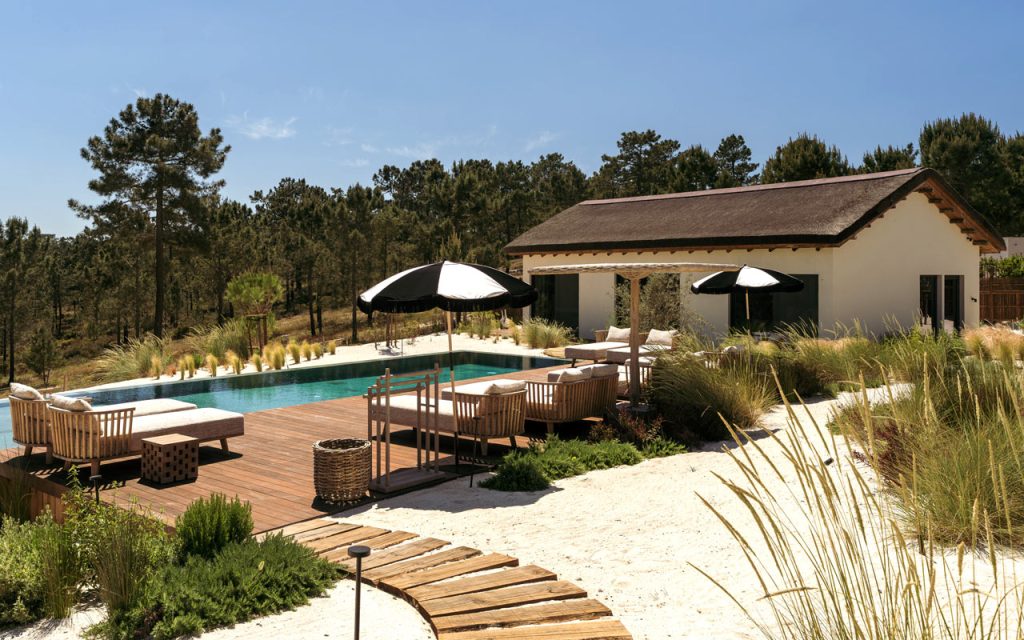
Timber decked pool terrace with teak lounge furniture and black parasols at Villa Stark, Comporta, Portugal
Poolside living at its most effortless — teak seating, black parasols, and Cape Reed thatch framing the perfect afternoon at Villa Stark.

The Project

The completed installation spans 760 square metres of premium Cape reed thatch (Thamnochortus insignis), applied across both the main residence and a separate guesthouse. The thatched roofs tie the two structures together visually, creating a unified design language rooted in natural texture and warmth.

Cape Reed’s master craftsmen worked with precision to create elegant roofing systems that complement the soft, neutral tones of the contemporary whitewashed architecture. The thatch sits low and clean against the rooflines, reinforcing the villa’s understated, nature-inspired character — never overpowering, always in harmony with its surroundings.

The wider landscape setting is equally impressive. Raked sand gardens, native coastal planting, ornamental grasses, weathered timber walkways, and a striking dark-tiled infinity pool frame the property and draw it deeper into the Comporta landscape. The result feels less like a house in a garden and more like a retreat grown from the land itself.

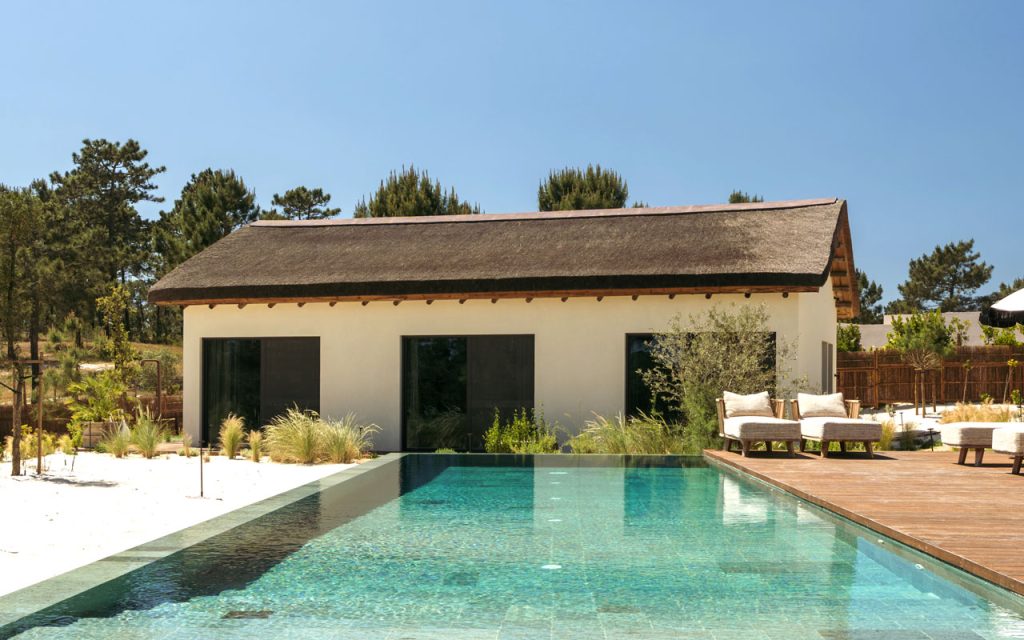
Cape Reed thatched pool house with timber decking and infinity pool at Villa Stark, Comporta
Clean lines, natural materials, and a Cape Reed thatched roof — the pool house at Villa Stark sets a new standard for outdoor living in Comporta.

The Challenge

Work on the project began in February 2026 and took approximately two months to complete — though not without its challenges.

Portugal’s Atlantic coast in winter is unpredictable. Periods of torrential rain and powerful thunderstorms caused delays during the construction phase, requiring the team to carefully manage scheduling and protect both materials and installation progress on site.

The distance between the project site and Cape Reed’s European base in Estepona, Málaga added a further layer of logistical complexity. Coordinating material supply, transport across borders, and the scheduling of skilled installation teams required meticulous planning to keep the project on time and on budget.

Thanks to Cape Reed International’s extensive experience delivering projects across Europe and in remote international locations — from the UAE and Dubai to the islands of the Indian Ocean — the team navigated every challenge with confidence. Materials were transported efficiently, installation windows were maximised during breaks in the weather, and the project was delivered to the highest standard.

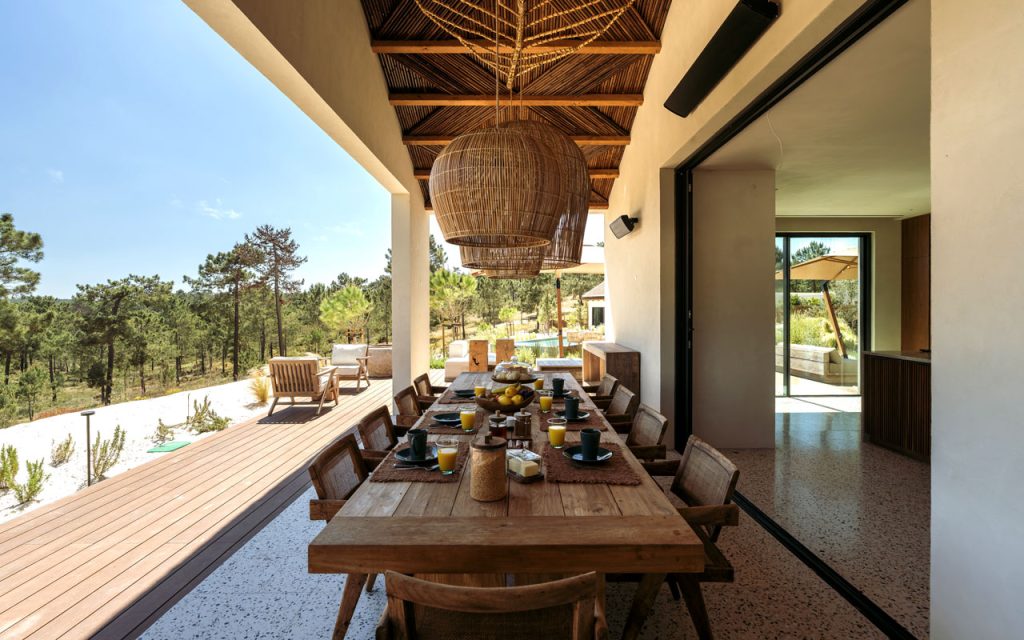
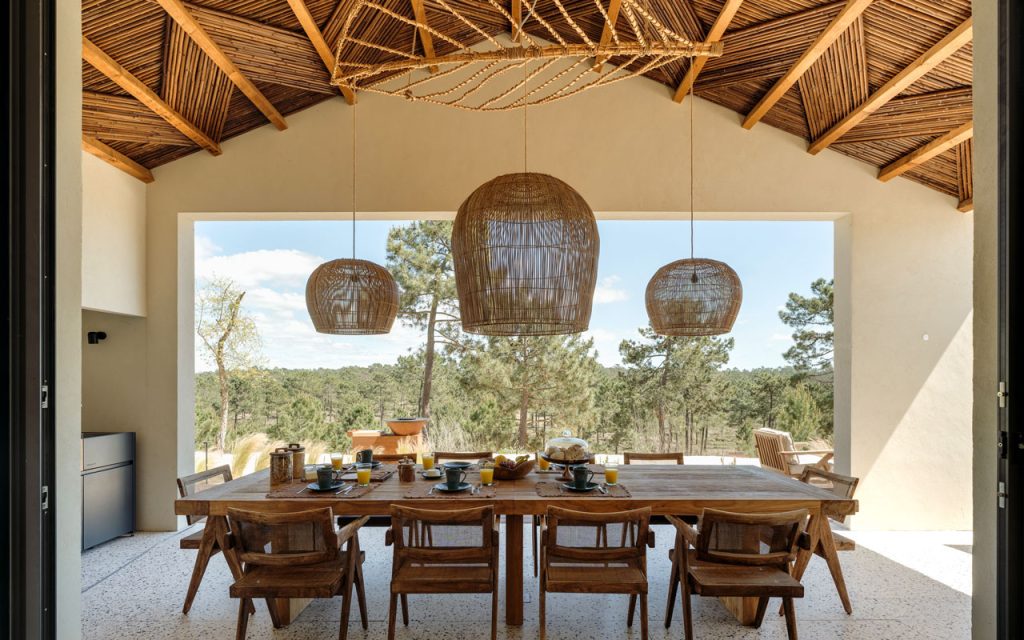
Covered outdoor dining terrace with reed lath ceiling, rattan pendant lamps, and timber dining table at Villa Stark, Comporta
Breakfast under the laths — the covered dining terrace at Villa Stark, where Cape Reed’s reed lath ceiling and handwoven rattan pendants frame every meal.

The Result

The Comporta Retreat is a masterclass in restrained luxury. The thatched roofs breathe life and warmth into the contemporary architecture, grounding the villa in its Atlantic coastal setting and connecting it to a long tradition of natural building that Comporta itself is famous for.

It is a home that feels as though it has always been there — and that is exactly the point.

“The finished result is a refined yet understated luxury retreat that embraces both comfort and sustainability.”

Project Highlights

760m² of premium Cape reed thatch (Thamnochortus insignis)
Main residence and guesthouse both thatched
Complementary timber walkways and outdoor decking
Infinity swimming pool with timber pool deck
Native coastal planting and landscaped sand gardens
Completed April 2026
Managed from Cape Reed’s European base in Estepona, Málaga

Reed lath vaulted ceiling with three rattan pendant lamps above a timber dining table, Villa Stark outdoor terrace, Comporta
The dining terrace at Villa Stark — three handwoven rattan pendants, a vaulted reed lath ceiling, and the Portuguese pine forest as your backdrop.

Frequently Asked Questions

What type of thatch was used on the Comporta Retreat?

Cape Reed used authentic Cape reed thatch — Thamnochortus insignis — sourced from South Africa. This premium natural grass is prized for its durability, its clean appearance, and its ability to blend naturally into coastal and Mediterranean environments. It is the same material used on iconic hospitality projects across Europe, the Middle East, and Africa.

How long does a Cape reed thatched roof last?

A professionally installed Cape reed thatched roof typically lasts between 20 and 35 years, depending on the local climate, roof pitch, and maintenance regime. Coastal environments like Comporta benefit from the natural salt-resistance properties of Cape reed, making it particularly well suited to Atlantic and Mediterranean coastal properties.

Is Cape reed thatch suitable for a modern, contemporary home?

Absolutely. The Comporta Retreat is a perfect example of how Cape reed thatch can be seamlessly integrated into sleek, contemporary architecture. Its natural texture and warm tones complement clean lines and neutral palettes beautifully, adding depth and character without compromising the design. Increasingly, architects and designers across Europe are specifying thatch for exactly this reason.

Can Cape Reed International manage projects outside of Spain?

Yes. While Cape Reed’s European base is in Estepona, Málaga, the team regularly delivers projects across Europe and internationally. The Comporta Retreat is one of many cross-border projects successfully completed in recent years. Cape Reed has experience managing logistics, material transport, and skilled installation teams across a wide range of locations, ensuring consistent quality regardless of where the project is.

What is Fireshield and Why Every Thatch Roof in Spain Needs It

Thatched roofs are having a well-deserved renaissance across Spain and Europe. From luxury villas on the Costa del Sol to boutique resorts in Andalucía, more property owners and developers are choosing natural thatch for its stunning aesthetic, exceptional insulation, and eco-friendly credentials.

But there is one question that comes up almost every time: what about fire?

It is a fair concern. Spain is a country where summer wildfires are a very real threat, where temperatures regularly push above 40°C, and where fire safety regulations are becoming increasingly stringent. For anyone investing in a thatched roof, fire protection is not an afterthought — it is a fundamental part of the project.

That is exactly why you need Cape Reed Fireshield.

The fire risk reality for thatch roofs in Spain

Natural thatch — is a dense, tightly packed roofing material. When properly constructed, a professional thatch roof is far less fire-vulnerable than many people assume. However, untreated thatch is still classified as a combustible material, which creates two significant challenges for property owners in Spain:

Insurance and liability. Insurers increasingly require documented fire-retardant treatment for thatched structures, particularly in high-risk zones. Without it, you may find your policy invalid or your premiums prohibitively expensive.

Regulatory compliance. Spain’s Technical Building Code (Código Técnico de la Edificación, or CTE) governs fire safety in construction through its Basic Fire Safety Document (DB-SI). While regulations have historically focused on conventional buildings, scrutiny of combustible cladding and roofing materials has intensified significantly since 2024, in line with broader EU fire safety frameworks. The EU’s Construction Products Regulation (CPR 2024/3110) is also bringing greater harmonisation to fire classification standards across member states — meaning property developers and architects across Spain will face a higher bar for demonstrable compliance in the years ahead.

Simply put: if you are building or renovating with natural thatch in Spain today, fire-retardant treatment is no longer optional. It is essential.

Cape Reed Fireshield Application
Cape Reed International specialists applying Fireshield fire-retardant treatment to a natural thatch roof in Spain

What is Fireshield?

Fireshield is Cape Reed International’s proprietary fire-retardant treatment system, specifically formulated for natural thatch and timber structures.

It is not a coating or a paint. Fireshield is a deeply penetrating treatment that works at a material level, dramatically reducing the ignition point and flame-spread rate of natural thatch and timber without altering its appearance, texture, or performance.

Here is what makes it different from generic fire-retardant products on the market:

Formulated specifically for thatch and timber. Many fire-retardant products are designed for synthetic or industrial materials. Fireshield is engineered around the specific properties of natural reed and timber — the porosity, the fibre structure, the way moisture interacts with the material in different climates.

Environmentally responsible. Fireshield’s formula is environmentally friendly and does not introduce harmful chemicals into the structure or the surrounding environment. This matters enormously for eco-conscious clients and for properties near protected natural areas, which is common across coastal Spain.

Invisible protection. Once applied, Fireshield leaves no visible residue. Your thatch roof looks exactly as it should — naturally beautiful — while offering significantly enhanced fire resistance.

Tested and certified to international standards. Cape Reed’s Fireshield products are rigorously tested and certified to meet international fire safety benchmarks, giving you documented proof of compliance for insurers, local authorities, and building inspectors.

How Fireshield works

The treatment is applied by Cape Reed’s trained specialists, either during the thatching process or as a retrofit treatment on an existing roof. The product is sprayed evenly across the thatch surface and penetrates deep into the reed stems and timber fibres.

When exposed to heat or flame, the treated material undergoes a chemical reaction that dramatically slows combustion. Rather than igniting readily and spreading flame, treated thatch chars slowly, buying critical time for evacuation and emergency response — and often preventing a fire from taking hold at all.

Fireshield is available in two formulations:

  • Thatch Fire Retardant — designed for natural reed thatch roofs, reducing flammability while preserving the material’s natural insulating and aesthetic properties.
  • Timber Fire Retardant — formulated for pergolas, decking, gazebos, bridges, and other timber structures, providing the same level of protection for all wooden elements of your outdoor space.

For a comprehensive outdoor build — a thatched lapa with a timber deck and pergola, for example — Cape Reed applies both treatments as standard, ensuring full-structure protection.

Cape Reed Fireshield Application
Close-up of Fireshield fire-retardant being sprayed onto natural reed thatch by a Cape Reed team

Why it matters for resorts, villas, and commercial properties

Private homeowners are not the only ones who need to think about this. For hotel developers, resort operators, and commercial property owners in Spain, the stakes are even higher.

A single fire incident at a hospitality property can mean loss of life, total destruction of the structure, reputational damage that takes years to recover from, and complex legal liability. Insurers for commercial hospitality properties are rigorous — and they are getting more so.

Cape Reed works with resort and hotel developers across Spain and Europe who specify Fireshield as a mandatory part of every thatched structure they commission. It forms part of the project specification from day one, not as a bolt-on but as a core component of a responsibly built outdoor space.

For clients pursuing sustainability certifications or ESG reporting, Fireshield’s environmentally responsible formulation also supports those goals — fire safety and environmental responsibility do not have to be in conflict.

The Cape Reed approach: safety built in, not added on

At Cape Reed International, we have been constructing thatched roof structures for over two decades. In that time, we have built projects across Europe, Africa, and beyond — and we have seen first-hand what happens when fire protection is not taken seriously.

Our position is straightforward: every thatched roof and timber structure we build in Spain receives Fireshield treatment as standard. We do not treat it as an upgrade or an optional extra. It is part of what it means to build responsibly with natural materials.

When you commission a thatch roof or timber structure with Cape Reed, you receive:

  • Professional application by trained specialists
  • Certified, documented fire-retardant treatment for insurance and compliance purposes
  • A structure that retains its full natural beauty
  • Peace of mind that your investment is protected
Cape Reed Fireshield Application
The Cape Reed team treating a thatched roof with Fireshield, the certified fire-retardant solution for natural thatch and timber

Ready to protect your thatch roof?

Whether you are planning a new build or looking to retrofit protection onto an existing thatched structure, Cape Reed’s Fireshield treatment is available across Spain and Europe.

Shop Fireshield →
Contact our team to discuss your project →

Frequently asked questions

1. Does Fireshield change the look or feel of my thatch roof?

No. Once applied and dried, Fireshield leaves no visible residue on your thatch or timber. Your roof will look exactly as it did before treatment — the natural colour, texture, and character of the reed are fully preserved. This is one of the reasons we developed a treatment specifically for natural thatch rather than adapting an industrial product.

2. How often does Fireshield need to be reapplied?

The frequency of reapplication depends on the age of the thatch, the local climate, and exposure conditions. As a general guide, we recommend a professional inspection and reapplication assessment every three to five years. In high UV or coastal environments — common in southern Spain — more regular checks are advisable. Cape Reed can advise on the right maintenance schedule for your specific property and location.

3. Is Fireshield a legal requirement for thatched roofs in Spain?

While Spain’s CTE does not single out thatch roofing with a blanket blanket mandate, combustible roofing materials are subject to fire safety requirements under the DB-SI framework, and compliance with these is required for planning and building approvals. Beyond regulation, most insurers now require documented fire-retardant treatment as a condition of cover for thatched properties. Given the increasing scrutiny on combustible materials under both Spanish and EU frameworks, we strongly advise all clients to treat Fireshield as an essential, not optional, investment.

4. Can Fireshield be applied to an existing thatch roof, or only during construction?

Fireshield can be applied to both new and existing thatch roofs. If you have a thatched structure that has not been treated — whether built by Cape Reed or another contractor — our team can assess the roof and carry out a retrofit treatment. We will inspect the condition of the thatch first, as Fireshield is most effective when the roof is in good structural condition.

5. Does Fireshield cover timber structures as well as the thatch itself?

Yes. Cape Reed offers a dedicated Timber Fire Retardant as part of the Fireshield range, formulated specifically for wooden structures including pergolas, decking, gazebos, and structural timber elements. For full outdoor builds combining thatch roofing and timber construction, we apply both treatments to ensure every element of your outdoor space is protected to the same standard.

Alcazaba Beach, Estepona

Located on the beachfront in Estepona, Alcazaba Beach is one of the Costa del Sol’s most prestigious residential developments. Designed by renowned Marbella architect Melvin Villaroel, the project is celebrated for its nature-inspired architecture, lush tropical gardens, and timeless Mediterranean character.

Over the years, Alcazaba Beach has received multiple architectural awards for its landscaping and harmonious integration with the natural environment. Many of the community spaces, including the gym and poolside bar, featured traditional roofs finished with Spanish heather, locally known as brezo.

However, after decades exposed to the coastal climate, the community decided it was time to renovate and modernise these iconic roofs while preserving their natural appearance.

That is where Cape Reed International was appointed to lead the refurbishment works.

Refurbishing Traditional Brezo Roofs with Premium Cape Reed Thatch

The objective of the project was clear from the beginning. The roofs needed to maintain their warm and natural aesthetic while significantly improving durability, waterproofing, structural integrity, and fire protection.

Cape Reed International carried out a complete refurbishment process that included:

  • Dismantling and removing the existing brezo roof coverings
  • Repairing and reinforcing the timber roof structures
  • Refurbishing roof substructures with new timber battens and lath purlins
  • Repairing damaged waterproofing layers
  • Installing 300m² of premium Cape reed thatch (Thamnochortus insignis)
  • Incorporating Cape Reed FireBloc fire-retardant cloth throughout the roofing system
  • Completing the roofs with painted cement capping and nip detailing
  • Applying Cape Reed Fireshield fire-retardant coating for additional protection

As a result, the refurbished roofs now combine authentic natural aesthetics with modern performance and safety standards.

Twin thatched poolside cabanas at Alcazaba Beach Estepona refurbished by Cape Reed International Spain
Twin thatched cabanas overlooking the pool at Alcazaba Beach — a luxury beachfront refurbishment project completed by Cape Reed International in March 2026.

Combining Traditional Craftsmanship with Modern Protection

One of the defining features of this project was the balance between traditional roofing techniques and advanced fire-retardant technology.

The installation of premium Cape reed thatch created a visually refined finish that complements Alcazaba Beach’s tropical landscaping and architectural identity. At the same time, the integration of Cape Reed FireBloc and Fireshield systems significantly improved fire safety across the structures.

This combination allowed the community to preserve the natural beauty of the original design while enhancing long-term durability and performance.

Managing Coastal Climate Challenges During Construction

Like many coastal projects, this refurbishment came with several technical challenges.

One of the biggest obstacles was the unusually wet winter weather experienced on the Costa del Sol during construction. Heavy rainfall affected installation schedules and required careful project coordination throughout the refurbishment process.

Cape Reed’s team worked closely with the development’s management team to provide regular progress updates while minimising disruptions for residents.

In addition, although the original timber structures remained largely intact, several areas showed signs of age-related wear. Minor timber rot and insect damage were identified during the refurbishment works.

Therefore, additional timber supports were installed to reinforce the roof structures and ensure they could safely support the new thatched roofing system for years to come.

Luxury thatched roof cabanas at Alcazaba Beach Estepona after refurbishment by Cape Reed Spain
The completed thatched roof refurbishment at Alcazaba Beach, Estepona — natural beauty restored, performance upgraded, and fire protection built in throughout.

A Successful Commercial Refurbishment Project in Spain

The refurbishment project began in November 2025 and was successfully completed in March 2026.

Today, the upgraded roofs continue to enhance the luxury beachfront atmosphere of Alcazaba Beach while providing improved safety, structural integrity, and long-term protection against the coastal climate.

The project reflects Cape Reed International’s expertise in restoring and upgrading natural roofing systems for high-end residential and commercial developments across Spain and Europe.

Why Cape Reed Thatch is Ideal for Coastal Hospitality and Residential Projects

Cape Reed thatch offers several advantages for luxury coastal developments and hospitality environments.

Natural Mediterranean Aesthetic

Cape reed thatch blends beautifully into tropical gardens, beachfront properties, and outdoor leisure spaces.

Excellent Insulation Properties

Thatched roofs help regulate temperatures while creating cooler shaded environments.

Durability in Coastal Conditions

When installed correctly with quality waterproofing and maintenance systems, Cape reed performs exceptionally well in coastal climates.

Enhanced Fire Protection

Cape Reed FireBloc and Fireshield systems provide additional fire-retardant protection for natural roofing structures.

Sustainable Building Solution

Cape reed is a renewable natural material that supports environmentally conscious architecture and design.

Refurbished thatched roof gazebo at Alcazaba Beach Estepona with Cape Reed thatch and tropical gardens
The refurbished gym structure at Alcazaba Beach, Estepona — 300m² of premium Cape Reed thatch blending seamlessly with the development’s award-winning Mediterranean gardens.

Commercial Roofing and Refurbishment Specialists in Spain

Cape Reed International continues to work on luxury residential, hospitality, and commercial projects throughout Spain and Europe.

Our expertise includes:

  • Traditional thatching
  • Thatch roof refurbishments
  • Timber construction
  • Fire-retardant roofing systems
  • Outdoor hospitality structures
  • Natural roofing solutions
  • Coastal and climate-responsive outdoor architecture

Explore more projects at Cape Reed Projects.

FAQ’s

What work did Cape Reed International complete at Alcazaba Beach?

Cape Reed International carried out a full roof refurbishment project, replacing the existing brezo roofing with premium Cape reed thatch while upgrading structural supports, waterproofing, and fire protection systems.

What type of thatch was used for the refurbishment?

The project used premium Cape reed thatch (Thamnochortus insignis), known for its durability, natural appearance, and suitability for luxury outdoor environments.

How was fire protection incorporated into the roofing system?

Cape Reed installed FireBloc fire-retardant cloth within the roofing structure and treated the finished roof surfaces with Cape Reed Fireshield fire-retardant coating.

Mediterranean Pergola Trends for 2026

Outdoor living continues to shape the future of luxury architecture across Europe, and pergolas are now at the centre of modern Mediterranean design. In 2026, homeowners, architects, resorts, and hospitality developers are embracing pergolas not only as shade structures, but as fully integrated lifestyle spaces that combine sustainability, comfort, and timeless aesthetics.

Across Spain, Portugal, Italy, Greece, and Southern France, the demand for beautifully crafted outdoor structures is growing rapidly as property owners seek to maximise year-round outdoor living. The Mediterranean climate naturally encourages open-air lifestyles, making pergolas one of the most desirable additions to villas, hotels, restaurants, and beach clubs.

Here are the top Mediterranean pergola trends defining 2026.

1. Sustainable Natural Materials Take Centre Stage

Sustainability is no longer a luxury feature — it has become an expectation in European design. In 2026, natural timber, reed, and thatch materials continue to dominate outdoor architecture due to their environmental benefits and timeless Mediterranean appeal.

Architects and property owners are moving away from synthetic, mass-produced structures in favour of authentic materials that blend seamlessly into the surrounding landscape. Natural timber pergolas create warmth and texture while offering exceptional durability when properly treated for Mediterranean climates.

Thatch roofing and reed shading solutions are also becoming increasingly popular for luxury hospitality projects, eco-resorts, and coastal villas seeking a more organic and relaxed atmosphere.

Cape Reed square laminated timber structure at Laguna Beach Resort, Estepona.
Cape Reed square laminated timber pergola structure at Laguna Beach Resort, Estepona, Spain

2. Resort-Style Outdoor Living Spaces

Pergolas in 2026 are evolving into complete outdoor lifestyle environments rather than standalone garden features.

Luxury homeowners are investing in:

  • outdoor lounges
  • shaded dining areas
  • fully equipped outdoor kitchens
  • integrated bars
  • poolside relaxation zones
  • wellness spaces

The goal is to create a seamless indoor-outdoor experience that mirrors the comfort and sophistication of high-end Mediterranean resorts.

Hotels and restaurants across Europe are also incorporating larger bespoke pergola structures to improve guest experiences while maximising outdoor seating capacity throughout the year.

Beautiful handcrafted wooden pergola adding warmth and natural authenticity to an outdoor living space

3. Minimalist Mediterranean Design

Modern Mediterranean architecture is shifting toward cleaner, more refined aesthetics.

For 2026, pergola designs are embracing:

  • neutral earthy tones
  • streamlined timber structures
  • open-air layouts
  • soft natural textures
  • minimalist landscaping

This contemporary approach maintains the warmth and authenticity of Mediterranean style while aligning with modern European luxury design trends.

The result is a sophisticated outdoor environment that feels elegant, calming, and timeless.

Cape Reed project Benahavis Hills square timber pergola
Square timber pergola with comfortable outdoor seating nestled in the Benahavis Hills, Marbella

4. Climate-Adaptive Pergola Solutions

As temperatures continue to rise across Southern Europe, climate-responsive outdoor design has become increasingly important.

Pergolas are now being designed to:

  • improve airflow and ventilation
  • provide enhanced UV protection
  • reduce heat exposure
  • create cooler outdoor relaxation areas

Natural wooden pergolas remains particularly effective due to its insulating properties, helping maintain comfortable temperatures beneath outdoor structures even during peak summer months.

This trend is especially relevant for hospitality venues aiming to provide year-round comfort for guests in warmer Mediterranean destinations.

Outdoor seating area on a sun-drenched balcony sheltered beneath a natural Cape Reed pergola

5. Integrated Lighting and Smart Outdoor Features

Technology is becoming an important element of luxury outdoor living.

In 2026, pergolas increasingly feature:

  • integrated LED lighting
  • concealed audio systems
  • automated shading solutions
  • outdoor heating
  • smart lighting controls

These additions allow outdoor spaces to transition effortlessly from daytime relaxation to evening entertainment.

The emphasis remains on subtle integration that enhances the overall atmosphere without compromising the natural beauty of timber and thatch materials.

Elegant wooden pergola fitted with decorative lampshades, integrated speakers and ceiling fans for year-round comfort

6. Bespoke Pergolas for Luxury Hospitality

European hotels, beach clubs, and restaurants are moving toward highly customised outdoor structures that reflect their brand identity and guest experience goals.

Bespoke pergolas are being designed to:

  • create memorable guest spaces
  • increase outdoor dining capacity
  • enhance visual appeal
  • strengthen sustainability credentials
  • improve property value

Natural materials play a major role in helping hospitality venues achieve a more authentic Mediterranean aesthetic while appealing to eco-conscious travellers.

As experiential travel continues to grow, outdoor architecture has become a defining feature of luxury hospitality design.

Diblú Beach Restaurant in Marbella
Beachfront dining terrace at Diblú Beach Restaurant, Marbella, shaded by a stylish Mediterranean pergola

The Future of Mediterranean Outdoor Living

The pergola trends shaping 2026 reflect a broader movement toward sustainable luxury, wellness-focused design, and year-round outdoor living.

Across Europe, property owners are investing in outdoor spaces that combine:

  • natural beauty
  • functional comfort
  • environmental responsibility
  • timeless Mediterranean craftsmanship

Whether for private villas, hotels, restaurants, or resorts, bespoke pergolas continue to redefine how people experience outdoor living in Mediterranean climates.

At Cape Reed International, we believe outdoor architecture should feel both luxurious and deeply connected to nature — creating spaces that are built to be enjoyed for generations.

FAQ’s

What are the most popular pergola styles in Europe for 2026?

The most popular pergola styles for 2026 include minimalist Mediterranean designs, natural timber pergolas, reed-covered structures, and resort-style outdoor living spaces that combine luxury with sustainability.

Why are natural materials becoming more popular in pergola design?

Natural materials such as timber and thatch offer better sustainability, timeless aesthetics, and improved environmental performance compared to many synthetic alternatives. They also complement Mediterranean architecture beautifully.

Are pergolas suitable for year-round outdoor living in Southern Europe?

Yes. Pergolas designed for Mediterranean climates can provide shade, airflow, and weather protection, making outdoor spaces comfortable throughout much of the year.

Almuradiel, Ciudad Real

A Natural Thatch Roofing Project in the Sierra Morena Mountains

Nestled within the rugged landscape of the Sierra Morena mountains near Almuradiel in Ciudad Real province, this remarkable architectural project was designed to blend seamlessly into its natural surroundings.

The lodge was designed by Madrid-based architectural firm Beta-0 and constructed by Construcciones Vivar Fuentes. The vision behind the project focused on creating a building that respected the surrounding mountainside while embracing natural materials and timeless architectural character.

To complete the roofing works, Cape Reed International was appointed to install 600m² of premium Cape reed thatch.

The result is a striking mountain lodge that combines natural stone architecture with authentic thatched roofing, creating a refined yet organic appearance that feels fully connected to the landscape.

A Bespoke Cape Reed Thatch Roof Designed for the Environment

The roof design played a central role in the overall architectural identity of the lodge.

Cape reed thatch was carefully selected to complement both the natural stone façade and the mountainous environment surrounding the property. The warm tones and natural texture of the thatch help soften the structure while creating a visually balanced relationship between architecture and landscape.

The completed roofing system delivers:

  • A natural and timeless aesthetic
  • Excellent insulation performance
  • Climate-responsive roofing
  • Seamless integration into the mountainside
  • A durable roofing solution suited to rural environments

As a result, the lodge achieves a strong sense of harmony with its remote natural setting.

Cape Reed International thatched roof installation on a natural stone lodge nestled into the hillside of the Sierra Morena mountains, Spain

Overcoming Construction Challenges in a Remote Mountain Location

While the final result appears effortless, the construction process presented several significant challenges for the project team.

Difficult Access for Material Deliveries

Due to the remote mountain location, transporting roofing materials and equipment to the site required careful planning and coordination.

Access routes were limited, which made the delivery of Cape reed thatch and construction materials more complex throughout the installation process.

Despite these logistical challenges, Cape Reed’s team successfully managed the transportation and installation schedule to keep the project progressing efficiently.

Extreme Weather Conditions During Installation

The project also faced unusually severe winter weather conditions.

Heavy rainfall and flooding regularly affected site operations during construction. In addition, temperatures dropped low enough for ice to form directly on the roof surface.

These harsh weather conditions created additional safety and installation challenges for the roofing team.

However, through careful planning and adaptability, Cape Reed’s craftsmen continued working closely with the contractor and project team to maintain quality standards throughout the installation.
Specialist Craftsmanship and Collaborative Problem Solving

Another important aspect of the project was the collaborative approach taken during construction.

As the wider project team had limited previous experience with traditional thatched roof construction, Cape Reed’s specialised craftsmen played a key role in guiding the installation process and providing practical technical solutions.

Throughout the project, the team worked closely with both the architect and contractor to ensure the roofing system achieved the required structural performance while maintaining the intended architectural appearance.

This collaborative process helped ensure the completed roof met both aesthetic and functional expectations.

Rustic stone-walled lodge featuring a 600m² Cape Reed thatch roofing installation with panoramic views across the Spanish countryside

A Successful Commercial Roofing Project Completed in Spain

Work on the project began in January 2026 and was successfully completed in April 2026.

Today, the finished lodge stands as a beautiful example of how natural roofing materials can elevate modern rural architecture while respecting the surrounding environment.

The combination of natural stone and Cape reed thatch creates a warm, authentic atmosphere that perfectly reflects the character of the Sierra Morena landscape.

The project also highlights Cape Reed International’s ability to deliver complex roofing installations in demanding environments across Spain and Europe.

Why Cape Reed Thatch Works Perfectly for Mountain and Rural Architecture

Natural thatch roofing continues to grow in popularity for luxury lodges, rural retreats, and eco-conscious hospitality projects.

Natural Landscape Integration

Cape reed thatch blends effortlessly into mountain, countryside, and natural environments.

Excellent Thermal Insulation

Thatch roofing helps regulate interior temperatures throughout both hot summers and colder winters.

Timeless Architectural Appeal

Natural roofing materials create warmth, texture, and character that modern materials often cannot replicate.

Sustainable Building Solution

Cape reed is a renewable natural material that supports environmentally conscious construction.

Durability and Performance

When professionally installed, Cape reed thatch offers long-lasting performance even in challenging climates.

Exterior view of Beta-0 architectural firm's mountain lodge design combining traditional stonework and authentic thatched roofing in Ciudad Real province
Exterior view of Beta-0 architectural firm’s mountain lodge design combining traditional stonework and authentic thatched roofing in Ciudad Real province

Commercial Thatch Roofing Specialists in Spain

Cape Reed International specialises in bespoke thatching and natural roofing solutions for luxury residential, hospitality, and commercial developments throughout Spain and Europe.

Our expertise includes:

  • Traditional thatching
  • Cape reed roofing systems
  • Luxury lodge roofing
  • Hospitality roofing solutions
  • Timber and natural construction
  • Roof refurbishments
  • Fire-retardant roofing systems
  • Climate-responsive outdoor architecture

Explore more projects at Cape Reed Projects.

FAQ’s

Where is this mountain lodge project located?

The project is located in the Sierra Morena mountains near Almuradiel in the Ciudad Real province of Spain.

How much Cape reed thatch was installed?

Cape Reed International installed approximately 600m² of premium Cape reed thatch on the project.

What challenges were faced during construction?

The project faced difficult mountain access, severe winter weather, heavy rainfall, flooding, and freezing temperatures that caused ice formation on the roof.

CrossFinca, Alicante

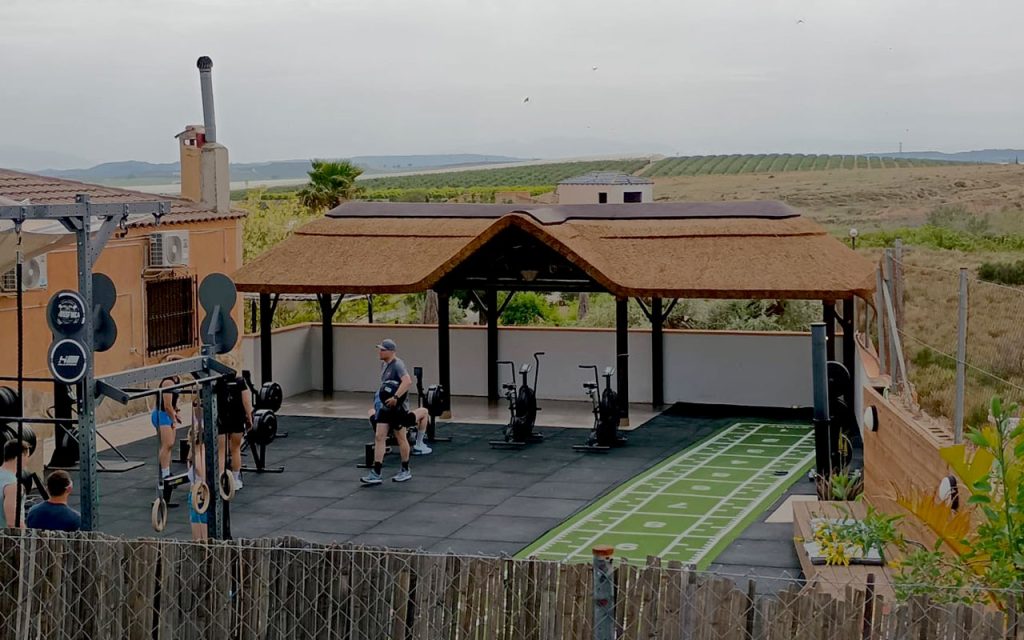
Located between Alicante and Murcia on the beautiful Costa Blanca, CrossFinca is redefining fitness tourism in Spain. This boutique fitness hotel combines outdoor training, wellness, relaxation, and Mediterranean living in one exceptional destination.

Designed for guests who value health, movement, and lifestyle, CrossFinca offers a fully equipped 150m² outdoor training area surrounded by breathtaking countryside views. However, during the hot Spanish summers, outdoor comfort became a major priority.

With temperatures often reaching 40°C, the owners wanted a shaded outdoor structure where guests could recover, socialise, dine, and relax between workouts.

That is where Cape Reed International came in.

Designing a Functional and Natural Outdoor Pavilion

Cape Reed International was appointed to design and construct a bespoke timber and thatch pavilion that would complement the natural surroundings while enhancing the guest experience.

The vision was clear from the start. The structure needed to feel authentic, welcoming, and connected to the landscape. At the same time, it needed to provide practical protection from the intense Mediterranean sun.

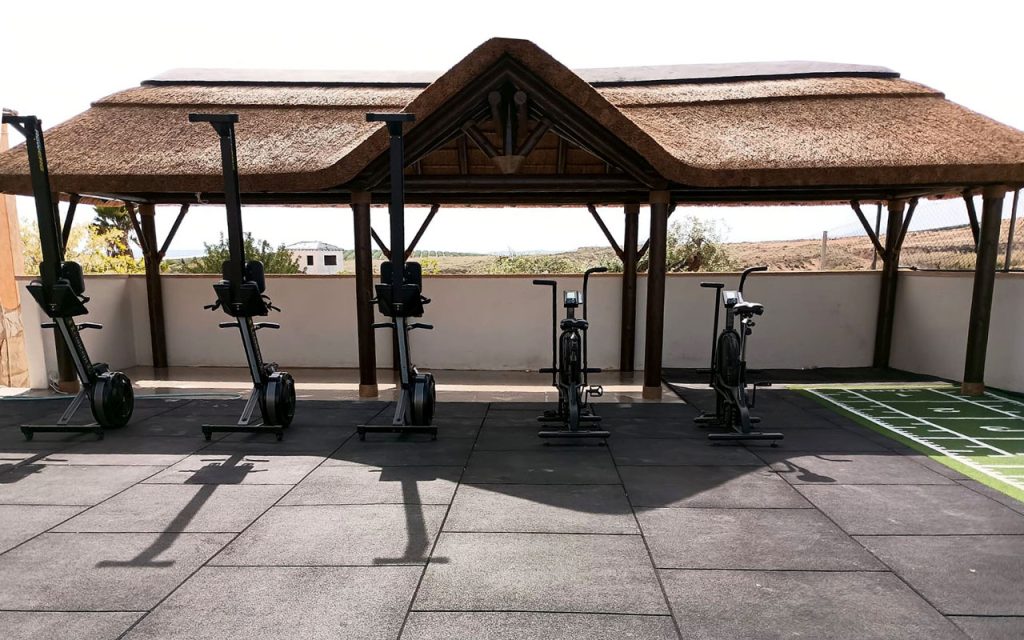
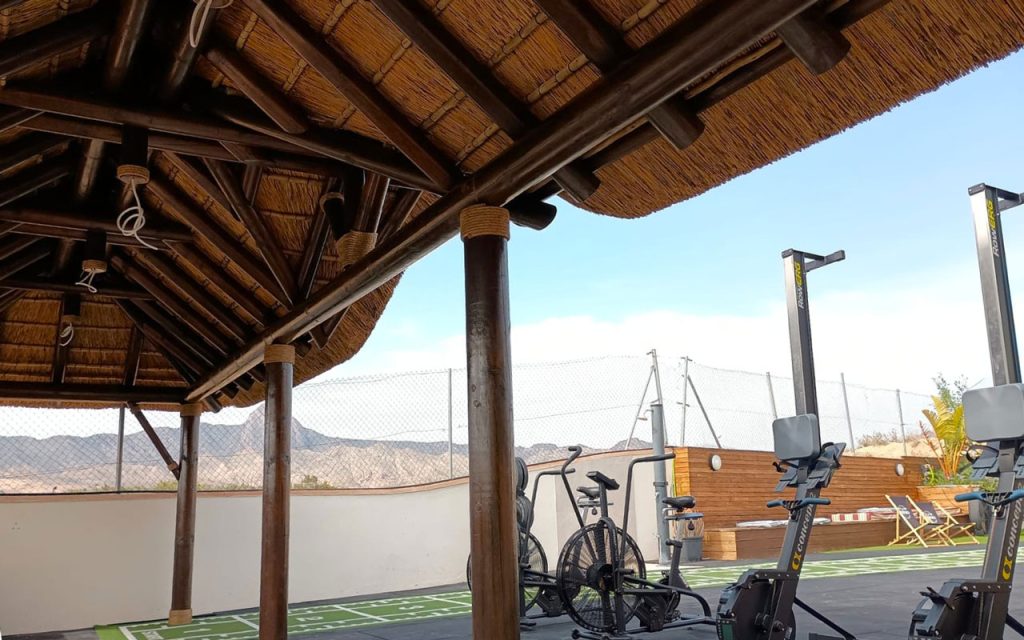
As a result, our team designed and built a custom 45m² timber and thatch pavilion featuring:

  • A striking apex entrance
  • Natural timber construction
  • Traditional thatched roofing
  • Open-sided airflow design
  • Comfortable shaded seating areas
  • A warm and relaxed atmosphere

Consequently, the pavilion now serves as a central gathering space for guests throughout the day.

Outdoor fitness training area with bespoke timber and thatch shade structure on Costa Blanca

Creating Comfortable Outdoor Living for Fitness Tourism

Fitness tourism continues to grow across Europe. Therefore, hospitality spaces must offer more than accommodation alone. Guests now expect immersive lifestyle experiences that combine wellness, comfort, and outdoor living.

At CrossFinca, the new pavilion creates exactly that.

Guests can now:

  • Relax between training sessions
  • Enjoy shaded outdoor dining
  • Recover comfortably after workouts
  • Socialise in a cooler environment
  • Watch sunsets across the Costa Blanca countryside
  • Experience outdoor living without sacrificing comfort

Moreover, the natural materials blend beautifully into the surrounding landscape. This creates an authentic Mediterranean atmosphere that aligns perfectly with the CrossFinca brand.

A Collaborative International Project

One particularly interesting aspect of the project was the international collaboration involved during construction.

While Cape Reed’s craftsmen were building the pavilion in Spain, the CrossFinca owners were based in Indonesia. Therefore, communication and project updates became essential throughout the process.

Our team provided regular photo and video updates directly from the construction site. In addition, we suggested several subtle design enhancements during the build to improve both functionality and visual appeal.

This collaborative approach ensured the project progressed smoothly from start to finish.

Custom-built thatched pavilion beside outdoor gym at CrossFinca wellness retreat in Spain

Efficient Construction with Exceptional Craftsmanship

Construction began in late March and was completed just three weeks later.

Despite the short timeframe, the Cape Reed team delivered a high-quality structure ready to welcome the hotel’s next guests without delay.

Every detail was carefully considered to ensure durability, aesthetics, and long-term performance in the Spanish climate.

Furthermore, the use of natural timber and traditional thatching creates excellent airflow and shade performance. This helps maintain cooler temperatures beneath the structure, even during peak summer heat.

Why Natural Timber and Thatch Work Perfectly for Hospitality Projects

Natural materials continue to play an important role in modern hospitality design. In warm climates like Spain, timber and thatch offer both visual appeal and practical benefits.

Some of the key advantages include:

Natural Cooling Performance

Thatched roofing helps reduce heat while improving airflow beneath the structure.

Warm and Inviting Aesthetics

Timber and thatch create relaxed outdoor environments that feel luxurious yet natural.

Sustainable Building Materials

Natural materials support environmentally conscious hospitality design.

Enhanced Guest Experience

Outdoor comfort areas encourage guests to spend more time socialising and relaxing.

Seamless Landscape Integration

Natural finishes complement countryside, coastal, and resort environments beautifully.

For CrossFinca, these benefits aligned perfectly with the hotel’s wellness-focused philosophy.

Cape Reed International Commercial Projects in Spain

Cape Reed International continues to design and build bespoke commercial outdoor environments across Spain and Europe.

From boutique hotels and hospitality venues to luxury resorts and outdoor wellness spaces, our projects focus on combining craftsmanship, sustainability, and functional design.

The CrossFinca pavilion is another example of how thoughtful outdoor architecture can transform guest experiences while enhancing the overall atmosphere of a property.

Bespoke Cape Reed timber and thatch pavilion overlooking the Spanish countryside at CrossFinca

Looking to Create an Outdoor Hospitality Space in Spain?

Whether you are developing a boutique hotel, wellness retreat, beach club, restaurant, or luxury hospitality destination, Cape Reed International can help bring your vision to life.

Our expertise includes:

  • Timber construction
  • Traditional thatching
  • Bespoke pergolas
  • Outdoor dining structures
  • Hospitality outdoor environments
  • Climate-responsive outdoor design
  • Sustainable natural building solutions

Discover more commercial projects at Cape Reed Projects.

FAQ’s

Why was a thatched pavilion chosen for this project?

Thatched roofing offers natural cooling, improved airflow, and a warm organic aesthetic. It also complements the surrounding countryside environment beautifully.

How long did the CrossFinca project take to complete?

Construction started in late March and was completed within three weeks, ready for the hotel’s upcoming guests.

Does Cape Reed International work on commercial hospitality projects in Spain?

Yes. Cape Reed International specialises in commercial hospitality projects across Spain and Europe, including hotels, resorts, restaurants, wellness retreats, and luxury outdoor environments.