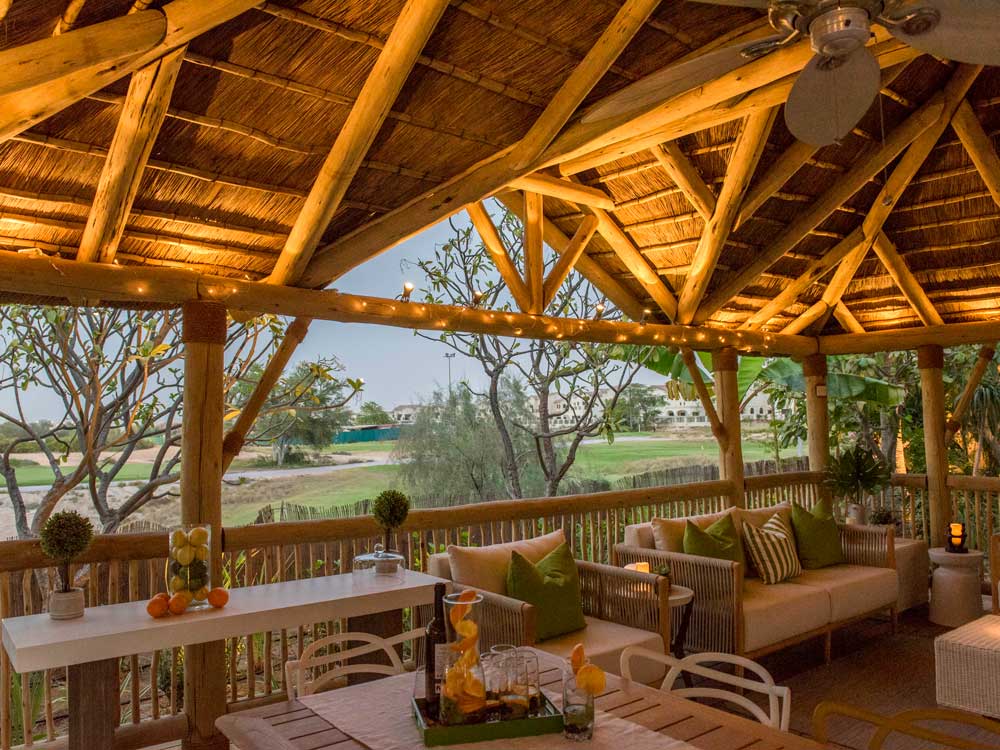
Archive for the ‘Outdoor Inspiration’ Category

How to get the most out of your gazebo all year round

Most of us have appreciated the tropical coolness, both temperature and style-wise, of a thatch roof with a cooling ceiling fan to provide the perfect protection on a sizzling hot Spanish summer day. Ideal for al-fresco dining, cooking or simply relaxing with friends protected from the hot summer rays. Yet, you may not have considered that these beautiful handmade wooden structures are also ideal for keeping dry and warm during the winter time.

All Year-Round Decoration

Where to start… there are so many uses for a gazebo, from lounge, bar, kitchen, BBQ and dining room to poolside chill out area, that the choice of decoration is almost infinite.

As a free-standing wooden structure with a thatch roof, a gazebo offers the perfect setting for a winter wonderland retreat. It provides the feeling of privacy and comfort whilst still experiencing the outdoors.

Wood Christmas Wonderland

The beauty of this type of permanent structure is that you can either add permanent features, such as plumbed in appliances or go down the more seasonal route with different elements according to the season. Once the heat of mid-summer has passed, many of the features such as lighting, candles and plants can be carried through into winter. Fairy lights are equally effective whilst dining al-fresco on a hot summer night as they are at Christmas time. Similarly, candles are a must, just swap the citronella for a more festive wintery fragrance. Imagine snuggled under a cosy throw around an open fire with a glass of mulled wine – heaven!

Fire Proofing Your Gazebo

There is one way to protect our bespoke wooden gazebos and reed roofs, and that is to treat the structure with Cape’s Reed’s unique fire retardant coating, Fireshield. The formula has been developed to delay the spread of a possible fire as much as possible, and has been created under the relevant international standards of safety, resistance and fire prevention. If you want to know more about this topic you can read our blog here.

Warming Winter Water

Some people swear by the health benefits of a cold-water bathing, whether they are swimming in arctic waters or taking a mid-winter dip on Brighton beach. Your gazebo could be the perfect place to install a cold-water bath tank. No ready to go that far yet? In that case you could opt for a relaxing Spa or hot tub. If you are going down this route it is advisable to design the gazebo for this purpose.

Add Value With Extra Space

Add value to your home, enjoy your outdoor space and save money! There is no denying that creating an addition outdoor room in your garden will add value to your home, and this is exactly what you are doing when you install a permanent wood gazebo in your garden. There is nothing quite as liberating as adding an extra space, be it for entertaining, enjoying some alone time or communing with nature.

Cape Reed turnkey project private villa with thatched outdoor living area with timber cladding

High Quality Eco-Friendly Wooden Structure

When you buy a gazebo Cape Reed timber, a pergola or any other timber structure, you will be assured that the design, supply and construction will be made from sustainable natural materials.

Conclusion

Maximizing the use of your gazebo all year round can greatly enhance your outdoor living experience. By incorporating weather-appropriate features such as heating elements, proper lighting, and durable furnishings, you can create a versatile space that is comfortable and functional in any season. Adding personal touches like cozy textiles and seasonal decorations can further enhance the ambiance, making your gazebo a cherished spot for relaxation and entertainment throughout the year. Embrace these tips to transform your gazebo into an all-season haven.

If you would like to find out more about Cape Reed’s gazebos, handcrafted furniture and other outdoor structures, get in touch at europe@capereed.com.

FAQs

How can I make my gazebo usable during the winter months?
To make your gazebo usable during winter, consider adding heating elements like outdoor heaters or a fire pit, using weatherproof furniture, and incorporating cozy textiles such as blankets and cushions.

What are some tips for decorating my gazebo for different seasons?
For different seasons, update your gazebo with seasonal decorations such as string lights, lanterns, and seasonal plants. Use appropriate colors and materials, like light, airy fabrics in summer and warm, plush fabrics in winter.

How can I protect my gazebo from harsh weather conditions?
Protect your gazebo by using weather-resistant materials, applying sealants to wooden structures, installing durable roofing, and using protective covers for furniture when not in use.

Can I install a gazebo on any type of surface?
Gazebos can be installed on various surfaces such as concrete, wood decks, and well-prepared ground. Ensure the surface is level and stable to provide a secure foundation for your gazebo.
How often does thatch roofing need re-thatching?

Who can resist the laid-back ambiance of a tropical paradise? This is exactly the feel that tiki thatch huts, pergola bars and gazebos provide. So, it will not surprise you to learn that natural thatch roofing is becoming the most popular choice of roofing for new pergolas and gazebos along the coastline of Southern Spain.

Sustainable and long-lasting

Cape Reed’s thatch roofing is made from cape reed (Thamnochortus Insignis), a sustainable carbon negative natural material that can help you or your business reduce your overall carbon footprint. However, like all natural substances it will need to be well maintained and at some stage repaired. In the case of natural thatch roofing, this means re-thatching.

High density stable and strong reeds

First, let’s go back to what we mean by thatch roofing. Cape Reed uses a type of reed that grows specifically in the Southern Cape of South Africa. We only harvest and use reeds that are at least 6 years old to ensure maximum strength, stability and density, which makes it much more resistant to rot and decay. This is why we guarantee our thatch roofs for 15 years, when regularly maintained.

Regular inspections and maintenance

As with any roof, you want to make sure that it is fit for purpose and hasn’t succumbed to the elements. How the structure performs is different depending on heat and humidity. Even though we guarantee our cape reed thatch roofing for up to 15 years, we recommend that you should get your thatch roofing inspected by a professional regularly, at least every 5 years.

A site inspection is crucial in order to ascertain the condition of any thatch roof, Cape Reed’s team is always happy to arrange a visit to assess whether any remedial work is required.

When to re-thatch your gazebo

If thatch is not maintained correctly, be it your thatched gazebo, pergola or pool entertaining area, this will reduce the longevity and appearance of the structure. Regular inspections can identify any weak or damaged areas, allowing the experts to make the necessary repairs.

All thatch repairs are different, quite often it is simply the top coat that will need to be replaced. When an area of weak or rotten thatch is identified during an inspection, Cape Reed’s thatchers can carefully remove, replace and compact the damaged section. In some cases, it could be that the entire structure, including the supporting wooden beams, needs replacing. However, it is important to remember, like any material and structure, performing regular maintenance enables you to identify potential issues before they become big problems, restoring the structure so that it can last for many years to come.

The cost of rethatching roofs will depend on a number of factors, such as size, materials, location and the amount of work required. Therefore, it is necessary to request a professional inspection and a personalized quote.

Fireshield Fire Retardant Treatment

All of Cape Reed’s thatch roofing is constructed with the addition of ‘firebloc’, a fire-resistent cloth which is interwoven into the thatch during the construction and repair processes. This unique fire-resistant material can withstand and resist temperatures of up to 500 degrees centigrade.

To further enhance the flame-resistance qualities after all maintenance work has been completed, Cape Reed’s Fireshield, a non-toxic fire-retardant coating is also sprayed at high pressure to coat both the internal and external surfaces of the thatch.

If you would like to arrange an inspection of your thatch roofing or to receive a personalized quote for repairs or information about Cape Reed’s Fireshield treatments, get in touch at europe@capereed.com.

Conclusion

Maintaining the beauty and integrity of thatch roofing requires regular care and attention. Re-thatching is a crucial part of this maintenance, ensuring that your roof remains durable, weather-resistant, and aesthetically pleasing. By understanding the factors that influence the lifespan of thatch and scheduling re-thatching accordingly, property owners can enjoy the timeless charm and functionality of thatched roofs for many years. Investing in professional re-thatching services not only preserves the unique appeal of your property but also enhances its value and longevity.

FAQs

How often does a thatch roof need re-thatching?
The frequency of re-thatching depends on various factors such as the type of thatch, climate conditions, and the quality of the initial installation. Generally, a well-maintained thatch roof can last between 20 to 30 years before requiring re-thatching.

What signs indicate that a thatch roof needs re-thatching?
Signs that a thatch roof needs re-thatching include visible thinning of the thatch layer, increased water penetration, and the presence of moss or fungi. Additionally, if the ridge appears worn out or damaged, it may be time for re-thatching.

Can I re-thatch just a portion of my roof, or does the entire roof need to be done?
Partial re-thatching is possible and often practical, especially if only certain areas are showing signs of wear. However, the ridge typically requires more frequent attention and may need to be replaced more often than the main roof.

How long does the re-thatching process take?
The duration of the re-thatching process varies based on the size of the roof and the extent of the work needed. On average, re-thatching a standard-sized roof can take several weeks to complete.

How much does re-thatching a roof cost?
The cost of re-thatching varies based on factors such as roof size, material choice, and labor rates. It’s recommended to obtain quotes from professional thatchers to get an accurate estimate for your specific project.

Cape Reed’s Fireshield could play crucial role in fire prevention for businesses on the Costa del Sol

Marbella, February 2023. International thatch and carpentry expert, Cape Reed, has launched a unique fire-retardant coating which is specifically formulated to help prevent fires from catching on structures built with natural sustainable materials. Approved by insurers and industry standards alike, the treatment provides an additional layer of protection against the possibility of wild fires for the many businesses on the Costa del Sol that have thatch roofing, reeds and natural wood structures.

Laguna Village fire… could it have been prevented?

In 2020, Laguna Village, famed for its Polynesian style Tiki thatched roof buildings, was razed to the ground. If Cape Reed Fireshield’s flame retardant coating had been applied to the structures, it could have prevented the spark from turning into a devastating fire, slowing the progress, thereby making it more manageable.

An extra layer of fire protection

Andre van Heerden, Managing Director of Cape Reed explained, “In Spain alone, in 2021 more than 283,000 hectares were badly damaged by wild fires. This poses a very real threat to business owners on the Costa del Sol who would face financial ruin if the chiringuitos, beach clubs and many other natural structures dotted along the coastline were to catch fire.

“Cape Reed has created many beautiful highly durable structures that need to be protected against the possibility of fire, that could be caused by extreme temperatures, by accident or even intentionally. This is why we launched Cape Reed ‘Fireshield’. Now we can offer all business owners access to our unique patented flame-retardant coating which is suitable for all types of structures, including pergolas, gazebos and of course thatched roofs”.

International flame resistance standards

Cape Reed Fireshield fire-retardant treatment is a specially formulated chemical that can be applied to thatch, timber and various other natural materials to significantly increase resistance to fire. The fire-retardant water based tumescent coating doesn’t contain any toxic elements, making it both environmentally and user friendly. The treatment conforms to all relevant international standards, including the EU, Dubai and UK standards, and offers an overall B-Roof (t1) fire rating.

Approved by Insurers

Most insurance companies require professionally administered fire-retardant treatments on any natural structures within the terms and conditions prior to providing full insurance cover. Cape Reed’s Fireshield fulfils this requirement.

Conclusion

In the beautiful yet fire-prone region of the Costa del Sol, the need for effective fire prevention measures is paramount for businesses. Cape Reed’s Fireshield offers a critical solution, providing robust fire resistance to thatched structures. By integrating this innovative product into your business premises, you not only enhance safety but also protect your investment and ensure the continuity of your operations. Don’t wait for a disaster to strike; take proactive steps with Cape Reed’s Fireshield and safeguard your business against the devastating effects of fire.

FAQs

What is Cape Reed’s Fireshield?
Cape Reed’s Fireshield is a fire-retardant treatment specifically designed for thatched structures. It enhances the fire resistance of these materials, making them safer and more resilient against fire hazards.

How does Fireshield work?
Fireshield works by chemically treating the thatch, reducing its flammability. This treatment significantly slows down the spread of fire, providing crucial extra time for evacuation and emergency response.

Is Fireshield suitable for all types of thatched roofs?
Yes, Fireshield is formulated to be effective on various types of thatched roofs, ensuring comprehensive protection across different materials and structures.

How often should Fireshield be applied?
The frequency of application depends on environmental conditions and specific usage. However, it is generally recommended to reapply the treatment every few years to maintain optimal fire resistance.

Is Fireshield environmentally friendly?
Yes, Cape Reed’s Fireshield is designed to be environmentally friendly. It is non-toxic and safe for use in various settings, ensuring that it does not harm the surrounding ecosystem.

History of the gazebo

When sitting under a gazebo, you may only see the intricate thatch roofing creating by artisans or the richness of the natural reed and sturdy wooden structure, without considering its history. You may not realize that gazebos have been around for literally centuries and have been favoured by diverse civilizations throughout history.

This train of thought was provoked by Cape Reed’s Managing Director, Andre van Heerden’s, trip to the Van Gogh Museum in Amsterdam. Whilst admiring the great painter’s work, in particular The Cottage, he was reminded that Vincent Van Gogh lived in a cottage with thatch roofing, which he called a ‘human nest’.

The painting evoked thoughts of simpler time, of safety, security and nature, and it became apparent that the desire to return to a more authentic way of life and to be at one with nature is something that inhabits the subconscious mind. The more successful we are, the more we crave nature and sustainable living. He was struck by the enduring desire to connect with nature and wondered in what ways it was satisfied throughout the ages. One visible way to achieve closeness to nature which dates back thousands of years is by creating decorative outdoor structures, like the humble (and often not so humble) gazebo.

The oldest know gazebos dates back to 1400 BC, when it was discovered in the plans for a garden of a high ranking official. Although, there is some debate amongst historians and archaeologists as to whether this type of structure could date back even further and were used as private temples.

Similarly, in ancient Greece and Rome, small gazebo type structures were built in marble to service as small temples. The structures were extremely popular and used as summerhouses and focal point in public spaces, which can be seen in ancient ruins in Rome and Pompeii.

In the Arabic world, these open sided structures were called ‘kiosks’, rather than gazebos. The Persian version dates back to the 10th Century and refers to a wide spectrum of designs ranging from fabric tents to marble structures.

Of course, we know that this type of structure is much-loved throughout Asia, one glance at an ornate garden pavilions and Japanese teahouses and it clear to see that many architects in the 18rth Century were heavily influenced by this Asian aesthetic, kick-starting the popularity of gazebos throughout Europe. Throughout the middle-ages, gazebos were popping up as decorative structures in France and Italy, and also in royal gardens in Elizabethan England.

By the 18th century the gazebo had also crossed the Atlantic to America, where they were adopted by the middle-classes. At one stage there was a preference for a wide front porch, which saw the decline in demand for gazebos stateside, but they soon became fashionable again as they could be positioned away from their homes, affording much-coveted privacy from their neighbours’ prying eyes.

Ok, so now we know the noble origins of this seemingly humble structure, but what is the definition and where did its name come from? Let’s start with the definition; a gazebo is a free-standing structure with a cupola roof and half height open walls.

The position and open walls are key parts of a gazebo’s character and also give the structure its name. The first mention (that we know of) in the English language of gazebo was in 1752, which is purported to be a combination of the English word ‘gaze’ and the Latin ‘ebo’, which together mean “I will see”, which refers to the views afforded from the structure. In today’s vernacular, we use many names to describe similar structures, ranging from pavilion to pergola, but essentially, they are all related to the original gazebo.

Fast forward to today and we are still enjoying our pergolas and the opportunities they provide for communing with nature whilst providing shelter, shade and decoration in any outdoor space. Cape Reed’s experienced team designs gazebos with thatch roofing for commercial and private residences and also creates other types of garden architecture according to clients’ particular specifications. They can be small, tall or large enough to host a party, covered in vines, climbing flowers, painted, whitewashed or simply showing the grain of the natural timber columns.

If you would like more information about Cape Reed’s gazebos with thatch roofing, summerhouses, wooden pavillions or any other types of wooden structure, contact Cape Reed SL on +34 951 77 54 95, email europe@capereed.com or visit the website https://www.backoffice.capereed.es.

5 Tips to Help You Choose The Perfect Pergola For Your Garden

As homeowners, we invest time, money, and love in creating the perfect interior design. Similarly, if your property has a private garden, there is no better feeling than being able to transform it into your own personal oasis.

One of the ways that we can define the use and create a space that can be used all year round is by adding a wooden pergola. This is a familiar idea, pergolas can be traced to the ancient Egyptians who built the structures to provide shade from the relentless heat, which is exactly what we still do today.

Below are some key takeaways from this article:

  • Increase your property value with the addition of a custom wooden pergola.
  • Tailor your pergola to suit your specific property, lifestyle, and budget.
  • Extend the life of your pergola with proper maintenance and fire retardant treatment.
  • Choose from various roofing options to create your desired style and provide shade.

There are no fixed rules about the design or size of a pergola. They come in all sizes, styles and shapes and can be fitted out and decorated for anything from a kitchen, outdoor dining or even a chill-out area. Also, as you are technically creating an extra room or space thanks to the structure of the pergola, this extra space can increase the value of your property.

If you have the space, there is nothing quite so inviting as the addition of a wooden pergola offering shade in the summer and providing a cozy shelter when the nights draw in. The type of wooden structure you choose is completely up to you, as it is possible to tailor-make a pergola to suit your specific property, lifestyle, and budget.

Here are some helpful hints on choosing the right pergola to suit your space.

Cape Reed white-wash semi-shaded pergola with timber laths

1. What is the purpose of your pergola?

Once you’ve made the decision to install a beautiful wooden pergola, the next step is to drill down exactly what you want to use it for. Maybe you want to create a dedicated outdoor kitchen and dining room, a relaxed lounge area with sofas, a bar and chill-out area, or a covered outdoor BBQ kitchen. This step is crucial. In addition to considering the size, style, and design, you must consider the position and possible access to utilities. If you are going to be cooking, you’ll want to be hooked up to water and electricity or possibly gas. If you plan to use the structure in the winter, you’ll probably want some heating, fire, lighting, and a ceiling fan when warm. All of these need to be considered.

2. Budget

The price of your pergola can vary widely depending upon the size, design, and materials used for pillars. There are many variables to consider, such as whether any work needs to be done before construction begins. Are you considering a stand-alone structure or a lean-to attached to your home? There is also the question of the type of wood and materials used for the roof. For example, will it have thatch roofing?

The purpose of the pergola will also have a large bearing on the cost, such as utility connections, appliances, and furnishings. As experienced craftspeople and installers, Cape Reed can help you with all of these questions and guide you on the budget for the type of structure you are considering.

Cape Reed construccion madera pergola acabado natural tarima

3. Space, size, and style

The design and shape of your wooden pergola will be informed by its purpose, it will also be integral in creating the character of the space. You may be drawn to the rustic-style wooden gazebo with thatch roofing, or a large contemporary-style pale wooden pergola would be more in keeping with your home.

The size and shape will be largely influenced by the space available, location, and purpose. If you want a large dining room that can accommodate a large table, then you’ll need to consider this when designing the pergola. You can also have fun choosing the flat, pitched, or curved roof style. Choose your desired style if the design is practical and appeals to your sensibilities.

4. Materials: wood and natural reed?

It is possible to buy flat aluminium pergolas or to build them out of bricks. However, most professionally designed and built pergolas are made of wood. This is because wood is one of nature’s most beautiful materials and is sustainable, versatile, strong and durable. If a pergola is properly maintained and treated with flame retardant products, it cannot last a lifetime.

All of Cape Reed’s pergolas are constructed using high-quality eco-friendly wood for the frames, and there are mGoany options for providing that all-important shade, from draped fabrics to natural reed thatch roofing. It is also possible to choose a synthetic thatch. You can read about the differences in our blog, “Thatch Roofing: Which is Better, natural or synthetic reed?”.

Building in wood also provides scope for putting your stamp on the look and feel of the pergola. You can discuss this with your designer whether you prefer a solid rustic dark stained wooden frame or a more contemporary whitewashed boho feel.

5. Furniture & decoration

Once the size, shape and style of the pergola have been established, you can start thinking creatively about the decoration and furnishings. This space will be your personal oasis, so at this stage you can let your creativity run wild. You can decorate the structure with fairy lights, commission bespoke Tuscan-style wooden furniture, create a relaxing boho haven, or preferring a pared-back minimalist space. The choice is yours. The ideal design is a space that can be dressed up or down according to mood or season, so you can enjoy your garden, entertain or unwind, rain or shine.

In a warmer climate like Spain, decorating the exterior with vines, colorful bougainvillea, or similar climbing plants creates color and a fragrant retreat.

As an established provider of exterior architecture and luxury outdoor entertainment areas, Cape Reed’s team of project managers, carpenters, and thatchers can advise you on every aspect of your pergola’s design, installation, and decoration.

If you would like more information about Cape Reed’s pergolas, gazebos, wooden pavilions, or any other types of wooden structure, contact Cape Reed SL at +34 951 77 54 95, email europe@capereed.com or visit the website https://www.backoffice.capereed.es.

FAQs

How do I choose the right size pergola?
As a rule of thumb, choosing your free-standing pergola size is recommended by first deciding how many people you want to sit under it comfortably. 

What can I place under a pergola?
To be straightforward, you can place everything you want under a pergola—rugs, seats, tables, toys, exercise equipment, and so on.

Where is the best place to put a pergola in the garden?
A pergola is best placed where there is a requirement for shade. A little shade is always helpful on those exceptionally hot and sunny days

Why You Should Consider a Wooden Pergola for Your Restaurant in Spain

To run a successful restaurant or bar, you need to do more than just offer great food and drinks. Your establishment needs to stand out for the right reasons. When you create an inviting and unique atmosphere, it tends to draw customers in and keeps them coming back. Furthermore, if it has an enticing original look and feel, you are more likely to tempt passers-by to come in and give you a go.

One effective way to achieve this is by installing a wooden pergola. In this article, we’ll explore why a wooden pergola could be the perfect addition to your restaurant in Spain.

Key takeaways from this article:

  • The use of a pergola can attract customers.
  • Apart from decoration, wooden pergolas provide protection and security.
  • A Cape Reed wooden pergola can contribute to customer satisfaction.

Here are five ways that a professionally designed and installed pergola can transform your business:

Enhancing Curb Appeal with Cape Reed Elegance

Imagine strolling down a charming street in Spain and coming across a restaurant with a captivating wooden pergola. The allure of Cape Reed thatch roofing combined with a solid wooden structure transports you to a luxurious tropical island. This unique and relaxed ambiance is exactly what a wooden pergola can bring to your restaurant. A bespoke pergola adds an air of grandeur while maintaining an inviting environment, enticing customers to linger and enjoy their time.

An excellent example of this transformation is The Sea Grill, at the Puente Romano Beach Resort. With the addition of a white wooden pergola featuring Cape Reed thatch roofing, the restaurant shed its tired appearance and embraced a modern Mediterranean aesthetic.

Sea Grill restaurant hotel Puente Romano techo junco africano pergola madera blanca

Expanding Capacity for Higher Profits

In regions like the Costa del Sol, the outdoor lifestyle is a major draw for locals and tourists alike. People want to savour their meals and drinks in the open air, taking in the beautiful surroundings. However, limited outdoor space can hinder your restaurant’s potential for growth. This is where a wooden pergola comes into play.

By incorporating a pergola, you can significantly expand your restaurant’s capacity. Pergolas can be designed as freestanding, arched, or attached structures, seamlessly blending with your establishment’s style. More seating translates to more customers, which ultimately leads to higher profits.

Protection from the Elements

While outdoor dining is a delight, it’s essential to address the unpredictable weather. Rain or excessive heat can deter customers and affect your revenue. Uncovered outdoor areas require frequent maintenance to stay presentable. A wooden pergola, however, provides a robust solution to these challenges.

Wooden pergolas offer reliable protection against rain and harsh sunlight, ensuring your customers can enjoy their meals comfortably. The design and craftsmanship of the pergola contribute to the al-fresco dining experience, enhancing it rather than diminishing it. Partnering with experts like Cape Reed can help you choose the right roofing system, whether it’s adjustable louvred wooden slats or natural Cape Reed thatch.

El Oceano beach restaurant pergola madera semisombra blanca

A striking example of weather protection and aesthetics is El Oceano Hotel and Restaurant in Mijas Costa. Their renovated restaurant terrace boasts a contemporary design with elements like glass, stone, and white-painted eucalyptus poles and slats, providing a dreamy outdoor dining space.

Catering to Diverse Customer Preferences

Every customer is unique, and their dining preferences vary. Some relish the comfort of air-conditioned interiors, while others cherish the opportunity to dine in the open air. By incorporating a wooden pergola, you strike the perfect balance, accommodating both indoor and outdoor seating.

This versatility creates a more inclusive dining experience, ensuring that all your customers can enjoy your offerings in their preferred setting. Whether it’s a cozy indoor corner or a breezy outdoor spot, your restaurant becomes a welcoming space for all tastes.

Elevating the Customer Experience

The ultimate goal of any restaurant is to create a memorable experience that keeps customers returning. A wooden pergola can play a pivotal role in achieving this goal. Beyond its visual appeal, a pergola can be customized to integrate various technologies, enhancing the overall experience.

Imagine strolling down a charming street in Spain and coming across a restaurant with a captivating wooden pergola. The allure of Cape Reed thatch roofing combined with a solid wooden structure transports you to a luxurious tropical island. This unique and relaxed ambiance is exactly what a wooden pergola can bring to your restaurant. A bespoke pergola adds an air of grandeur while maintaining an inviting environment, enticing customers to linger and enjoy their time.

Cape Reed commercial project the Boho Club with a semi-shaded timber pergola over the terrace

Conclusion

In the competitive world of restaurants and bars, standing out is crucial. A wooden pergola not only adds visual appeal but also enhances functionality, protection, and customization possibilities. From attracting customers with its unique charm to expanding capacity and providing weather protection, a wooden pergola can transform your restaurant in Spain into a thriving and unforgettable dining destination.

If you would like more information about Cape Reed’s pergolas, gazebos, wooden pavilions, or any other types of wooden structure, contact Cape Reed SL at +34 951 77 54 95, email europe@capereed.com or visit our website www.capereed.es.

FAQs

Are wooden pergolas durable in varying weather conditions?
Yes, wooden pergolas are designed to withstand different weather conditions. Properly treated and maintained wood can offer long-lasting performance, and options like Cape Reed thatch roofing provide additional protection.

Can I customize the design of my wooden pergola?
Absolutely! Wooden pergolas can be fully customized to align with your restaurant’s aesthetics and requirements. You can choose the type of wood, roofing material, and additional features to create a unique look.

How can a wooden pergola increase my restaurant’s profits?
By expanding your seating capacity, a wooden pergola allows you to accommodate more customers, leading to higher sales of food and drinks and ultimately boosting your profits.

Is it possible to incorporate technology into a wooden pergola?
Yes, modern wooden pergolas can be equipped with various technologies such as lighting, sound systems, power outlets, and even outdoor kitchen facilities, enhancing the overall customer experience.

What professional assistance is needed for installing a wooden pergola?
It’s advisable to work with experienced pergola design and installation companies, such as Cape Reed, to ensure proper design, construction, and integration of the pergola into your restaurant’s layout and theme.

Elevating Your Beach Chiringuito: A Sustainable Vision

As the holiday season in the south of Spain winds down, it’s the perfect time to contemplate enhancing your beach chiringuito for an even more successful upcoming season. Ensuring your establishment remains popular and appealing is key in the ever-competitive hospitality industry.

All over the world, more and more establishments are moving towards being more sustainable. In staying with the times, incorporating sustainable timber and thatch roofing in the design and renovation of your chiringuito is not only environmentally responsible, but also resonates well with your dedication to a sustainable future.

Sustainable exterior architecture

At Cape Reed International, we share your commitment to sustainable practices, using authentic Cape reed thatching and solid wooden installations. Utilizing natural materials that is responsibly sourced and environmentally friendly can enhance the overall aesthetic of your property while also appealing to the growing eco-conscious consumer base. It’s a win-win, aligning both with your values and the trend towards more sustainable businesses.

Incorporating timber and thatch roofing into the renovation not only showcases your passion for sustainability but also sets a trend in the hospitality industry. It’s about creating a legacy beyond business success—leaving a mark in an industry that appreciates and adopts eco-friendly practices.

Specialists in pavilions, pergolas and gazebos

In order to ensure the longevity and sustainability of your timber exterior architecture, all aspects of the wooden structure, be it a pergola or pavilion should be planned by experienced technicians. All elements of the project, from the initial planning, assessment of the site, measurements, design and renders (images generated to illustrate the finished product), through to the use of the high-quality sustainable products are equally important.

Flame resistance

Another essential step is flame resistance. By applying Fireshield, a fire-retardant coating specifically formulated for use on natural materials, signifies your dedication to safety and sustainability. The use of Fireshield exemplifies your vision of leaving a positive mark, not only through business success but also by fostering a culture of safety and responsible construction practices.

Whether you are considering investing in new luxury outdoor spaces, extending your current pool entertainment area or installing a new pergola, with Cape Reed International at the forefront, your business will benefit and the future of sustainable and safe timber construction looks promising

Fireshield

Call on their expertise and local experience today!

https://www.backoffice.capereed.es/  |  638 421 464 |  john@capereed.com

FAQs

How does Fireshield flame retardant treatment work?
Fireshield has been formulated to adhere to all international flame resistance standards, which works by covering the structure in a water based intumescent coating (completely sustainable and non-toxic), which makes it much more different for a spark to take hold should the worst happen. Fire-retardant treatments are required by insurance companies to ensure they are sufficiently fireproofed.

Does Cape Reed guarantee all materials used in pergolas and other wooden structures are sustainable?
Yes, Cape Reed is 100% committed to using eco-friendly natural materials that are sustainably sourced. We not only guarantee that all of our wooden installations and thatching are of exceptional quality, and if treated correctly should last up to 15 years.

Why you need a pergola in Spain

The relaxed lifestyle in southern Spain is played out mainly outdoors due to the superb warm climate. Whether you prefer reading a book on the beach, a long lunch on a terrace or lazing around the swimming pool in your own garden, at some point you will need shade. One of the most attractive methods of providing protection from the sun is to install a beautiful bespoke wooden gazebo or pergola with natural Cape Reed style thatch roofing.

This is option is as equally viable for private residences with outdoor space as it is for iconic hotels and beach resorts, as they come in all sizes, shapes and styles. You need to look no further than the magnificent Sea Grill Restaurant at the Puente Romano Beach Resort or the new clubhouse in one of the world’s most exclusive areas, La Zagaleta, to see the range of styles and quality of these wonderfully charismatic structures.

  • Structures of all sizes and shapes
  • Sustainable wood finish for a beautiful natural look
  • Multifunctional space, from an extra sitting room to outdoor kitchen, BBQ or even a Jacuzzi
  • Bespoke fittings to suit your space and lifestyle.
Las Dunas Park semi-shaded timber pergola with ocean view

Bespoke garden structures

Outdoor structures come in all shapes and sizes, from charming thatched gazebos, outdoor kitchens and poolside cabanas to wooden pergolas suitable for corporate entertaining. There are many different options, which means that there is one to perfectly suit your space and to provide that all-important shade. When you buy a pergola through an established company, such as Cape Reed International, you get a bespoke structure that will complement your outdoor space and last for many years.

Multifunctional wooden installations

Pergolas and wooden gazebos are much more than outdoor structures – they become the perfect place to relax, entertainment and connect with nature. Apart from the afore mentioned benefits and the seriously cool tropical vibe achieved by building a thatched gazebo in your garden, you could also substantially increase the value of your property.

How to choose the right pergola for your garden

When considering which type of structure you require, you could be forgiven for being slightly confused and not knowing the difference between a pergola and gazebo. Simply put the difference between these two structures can be defined as follows:

  • Pergola: A wooden structure which usually covers a terrace to provide shade. Often in a private garden you will see colourful climbing plants or vines wrapped around the structure to provide overhead sun protection.
  • Gazebo: A self-contained outdoor structure with columns (in Cape Reed’s gazebos the columns are made of sustainable wood and can be treated to provide the preferred colour) and a thatch roof. You can see example of Cape Reed’s gazebos with thatch roofing all along the Costa del Sol, including La Caracola and Gran Melia Don Pepe.

Now that you know whether you need a gazebo or pergola, choosing the right look and feel is an important next step – do you like traditional, darker stained wood, a boho chic natural finish or maybe a beachy whitewashed look and feel? Think about your interior design and architectural preferences; do you like traditional and sturdy darker stained wood, natural or maybe a beachy whitewashed look and feel?

Similarly, the size and shape of the space will be a crucial factor, as you need to be able to make the most of the new pergola, use the rest of the space and enter the main property unimpeded.

Of course, all of these questions and more would be discussed when you commission a Cape Reed custom pergola.

Cape Reed commercial project the Boho Club with a semi-shaded timber pergola over the terrace

FAQs

Are wooden pergolas durable?
Yes, all of Cape Reed’s pergolas are made using high quality, durable materials. Our solid wood frames are made from sustainable timber and the natural thatched roofs are both treated with fire retardant. When treated and maintained correctly wooden pergolas and thatch roofing should last for many years.

How long can thatch roofing last?
The natural reed Cape Reed use for thatch roofing has a long 6-year maturation period, which makes it stronger and more durable than reeds which are cut earlier. The more mature the reed, the more resistant it will be to decay. This is how Cape Reed can offer a 15-year guarantee on all thatch roofing projects… and they can last much longer.

How to make your gazebo a cosy Christmas retreat

There is something magical about a wooden gazebo during the festive season, particularly in southern Spain, where you can enjoy the best of both worlds; enjoy the beautiful sunshine during the day, but when the sun goes down this is when it becomes a wonderful winter retreat with a cosy fire and lighting.

There are plenty of ways in which you can dress up your gazebo or even an open wooden deck, for the holiday season and celebrations. Whether you prefer minimal or maximalism, your decorations and furnishings can be a garish as you wish. Think sheepskins, blankets, and planters providing texture warmth and interest. From Christmas trees to hanging baskets, strings of fairy lights to garlands of natural greenery, the choice is yours.

Here are our favourite ideas for creating the perfect pergola for winter:

Turn up the heat

As touched upon above, the sunshine may be warm during the day time, but when night falls so does the temperature. Yet, this doesn’t mean that you can’t enjoy your beautiful thatched gazebo , after sundown, as there are plenty of fantastic heating options available.

You can choose to suspend heating units from the ceiling (not propane), mount them on the wall or under the structure. Alternatively, you could consider a brazier or patio heater, and you may not realise, that you can install a fire place in a thatched gazebo. Infrared is the quickest way to raise the temperature. And to ensure energy efficiency, it is a good idea to add side panels or heavy-duty curtains to stop the heat escaping. Or alternatively opt for a firepit for creating a warm atmosphere.

Side panels

Once you have chosen your preferred method of heating, it’s important to keep the interior nice and toasty. This can be achieved by adding side panels, in a range of materials, such as retractable canvas, screens, wood, louvred doors or privacy walls, adorned with plants.

Festive lighting

There is nothing quite light an artfully draped garland of fairy lights to evoke festive feelings and a warm, snuggly atmosphere. Depending upon the location and the utilities installed in your gazebo, these could be battery, solar or mains operated. For the main lighting, there are lots of stylish exterior pendant lights to choose from (both solar and mains powered), which can provide a beautiful ambient glow. If you want to really go for gold, why not illuminate the pathway with solar lights leading the way to the gazebo and adorn with hanging lanterns.

Whether you like the gentle twinkle of warm white or full-blown multi-coloured bulbs constantly alight, they create an inviting ambiance. There’s plenty of potential for draping around the outside, interior and around the pillars, balustrading or banisters to create a sparkling space.

Winter Proof Furniture Outdoor Structures

Whether you like the gentle twinkle of warm white or full-blown multi-coloured bulbs constantly alight, they create an inviting ambiance. There’s plenty of potential for draping around the outside, interior and around the pillars, balustrading or banisters to create a sparkling space.

Whether you like the gentle twinkle of warm white or full-blown multi-coloured bulbs constantly alight, they create an inviting ambiance. There’s plenty of potential for draping around the outside, interior and around the pillars, balustrading or banisters to create a sparkling space.

Choosing the right material is the single most important decision. Outdoor furniture and decorations should be made of durable material such as natural wood or coated metal (plastics aren’t quite as durable), which can survive the sunshine and the winter temperature, damp and rain. The correct maintenance and protection will help to extend the lifetime of the furniture. Natural wood such as teak is warmer and more inviting in a luxury outdoor space, as compared to metal, which can become very hot or cold, depending upon the weather.

The next step is to consider the right fabric for cushions, covers, blankets and curtains. They need to be resistant to fading in sunlight and mildew when exposed to moisture, so it’s important to choose fabric that is designed specifically for outdoor use, as it will be treated for UV, water and mould resistance.

Dare to go Bare

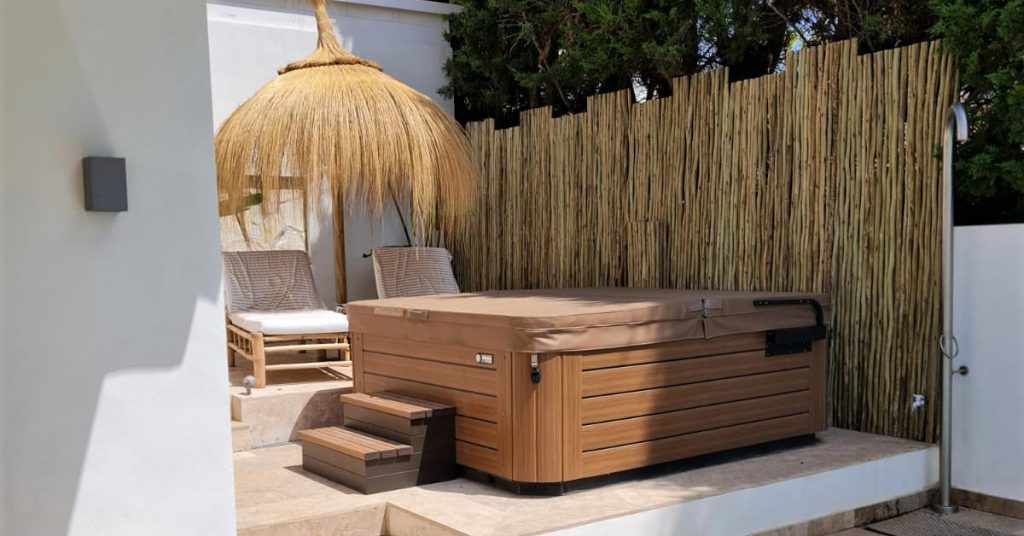
This option is not for the faint hearted, but a popular activity amongst many people… the hot tub! What better place to enjoy a hot bubbling bath with friends than in a cosy thatched gazebo? You can enjoy complete privacy, warmth and enjoy the exhilaration of being outdoors. If you wish to install a hot tub in your gazebo, you’ll need to make sure that it has the strength to sustain the weight and it isn’t raised too far off the ground. If your gazebo was created as a bespoke garden structure and installed by professional fitters, such as Cape Reed, then they will be able to advise you about the possibility of installing a hot tub.

Jacuzzi with timber lath fencing

Barbeque and mulled wine?

If your wooden gazebo doesn’t have the space for a full-blown outside kitchen, maybe you could install a barbeque? There is nothing quite as warming as a hot toddy, and as we’re getting ready for the festive season what could be better that mulled wine. Add to this the aroma and anticipation of freshly barbequed food … which always taste better outside. Cheers!

FAQs

Can I put a fireplace in a gazebo?
Yes, you can install a fireplace in a gazebo or pergola but you must take the necessary safety precautions. There needs to be plenty of space and enough ventilation and it must not be situated close to any flammable materials. Also, you should check local regulations.

Can I plumb a hot tub in a gazebo?
Yes, it is possible to plumb in a hot tub in a gazebo. However, you need to get advice from a professional with experience of installing gazebos. First, you’ll need to consider the size of the gazebo, whether you want privacy with the addition of retractable screens and the weight of the hot tub. For more advice get in touch with Cape Reed at info@capereed.es info@capereed.es

Is it safe to install a barbeque in a gazebo?
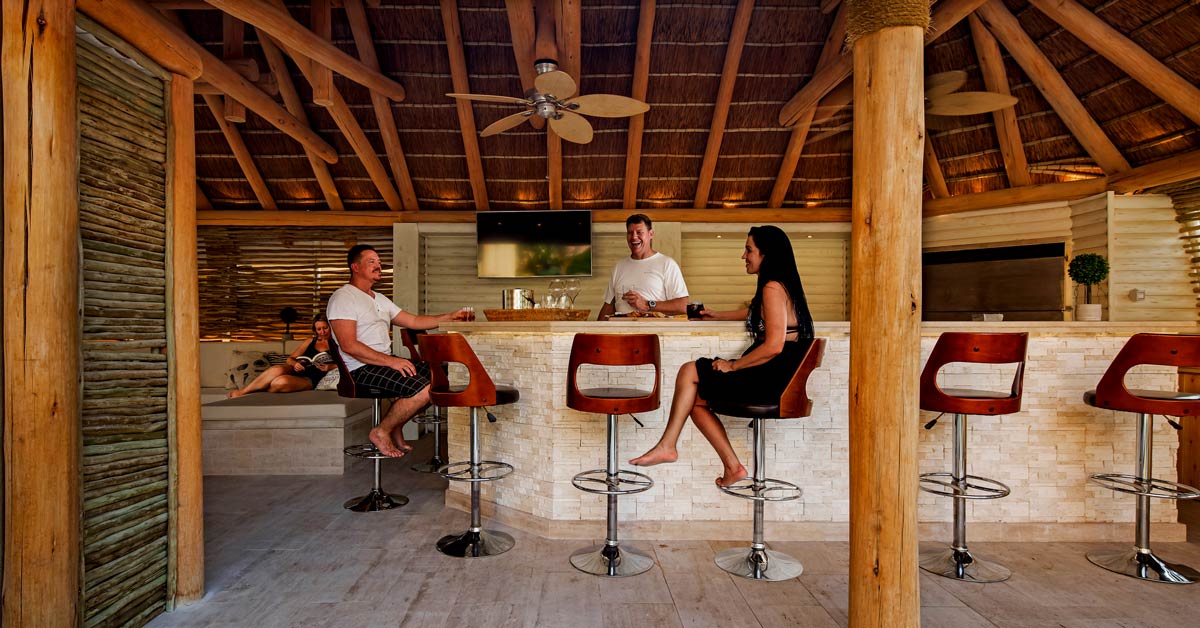
Yes, but you will need to ensure that there is enough ventilation and the roof height is adequate. Cape Reed can design and build a fully bespoke gazebo including a fully-fitted outside kitchen or barbeque, depending upon your requirements, budget and preference See this beautiful outdoor entertainment area in Marbella. Get in touch for more information.

Crafting Natural Elegance: Discover High-Quality Timber and Thatch Materials.

Cape Reed International – A Trusted Name in Timber and Thatch Construction

Known for stunning thatched gazebos and beautiful timber pergolas, Cape Reed International has long been a trusted name in timber and thatch construction. With residential and commercial projects across the globe, our structures are renowned for their natural aesthetic, durability and longevity.

The Importance of Quality Ingredients in Construction Materials

In the realm of construction, quality is paramount. Cape Reed International understands this principle implicitly and adheres to it rigorously. At the heart of every project lies the foundation of high-quality materials. These materials serve as the building blocks of durability, longevity, and, ultimately, customer satisfaction.

Sourcing Responsibly from Managed Forests and Plantations

One cannot overstate the significance of responsible sourcing. Cape Reed International takes pride in its commitment to ethical practices, sourcing its timber and thatch from managed forests and plantations. This ensures not only the sustainability of the materials but also the preservation of the environment. Direct Access to High-Quality Materials

Direct Access to High-Quality Materials

Our materials and products can be bought directly from our office in Estepona http://rb.gy/03rpll or via our online shop. 

Range of Products Available

From timber poles and bundles of thatch to pressure treated decking, daybeds and rustic timber furniture, our customers can be assured of the very same quality and durability that has earned us our reputation in the market.

Conclusion

So, if you are looking to source material for your next project, head on over to our shop or office where our team will happily assist you in selecting the right material for your project and share their expert advice drawn from years of experience in the industry.

FAQs

Can I purchase timber and thatch materials directly from Cape Reed International?
Yes, you can buy timber and thatch materials directly from Cape Reed International either at their office in Estepona or through their online shop.

What types of materials are available for purchase from Cape Reed International?
Cape Reed International offers a variety of materials including timber poles, bundles of thatch, pressure treated decking, daybeds, cladding and rustic timber furniture.

Are the materials used by Cape Reed International sourced responsibly?
Yes, Cape Reed International only utilizes natural materials of the highest standard that are responsibly sourced from managed forests and plantations.

Where can I find Cape Reed International’s office?
Cape Reed International’s office is located in Estepona. You can find the address on their website https://www.backoffice.capereed.es/ or by clicking here: http://rb.gy/03rpll.

Does Cape Reed International provide expert advice for selecting materials?
Yes, Cape Reed International’s team is happy to assist you in selecting the right materials for your project and provide expert advice drawn from years of experience in the industry.